









Send Message
Privacy statement: Your privacy is very important to Us. Our company promises not to disclose your personal information to any external company with out your explicit permission.
 Shenzhen Hong Ye Jie Technology Co., Ltd
English
Keywords:plaster craft Mold Silicone, condensation‑cure silicone rubber, RTV‑2 liquid silicone, gypsum artwork molding, high detail mold silicone, reusable plaster mold rubber
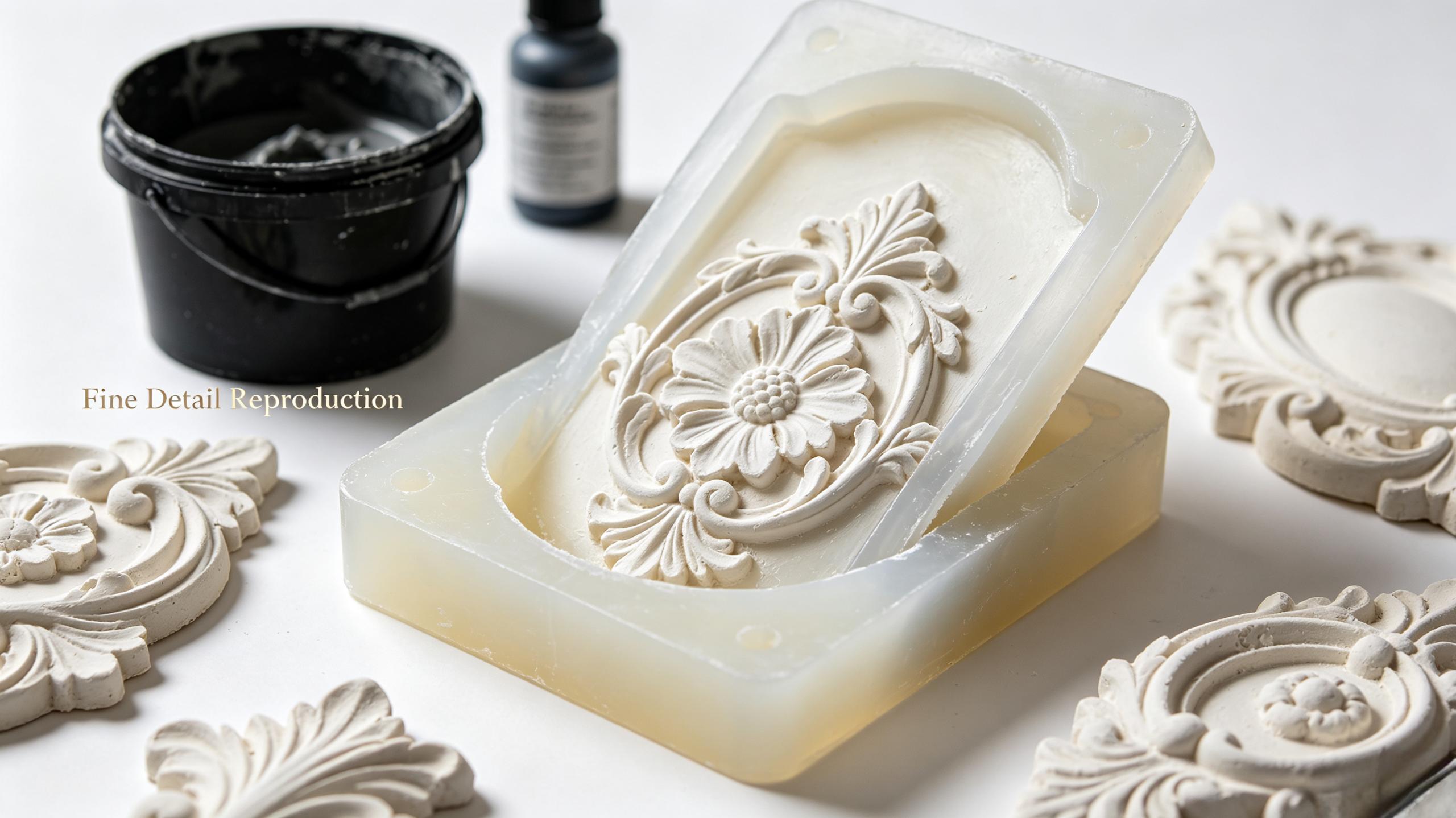
Key Sentences:This plaster mold silicone provides excellent fine‑pattern reproduction, enabling manufacturers to replicate intricate relief textures, vintage floral details and complex surface textures for high‑quality gypsum artwork.
Plaster craft production generally includes several stages: prototype carving, silicone mold making, gypsum slurry pouring, curing, demolding and post‑finishing. The mold‑making stage directly determines whether the final plaster product can present sharp lines, complete patterns and fine surface details. Traditional gypsum molds are low‑cost but brittle. They are not suitable for reproducing delicate textures and often break after limited production cycles. Rigid resin molds offer high hardness but lack flexibility. When demolding plaster pieces with undercuts, deep reliefs or complex geometric structures, the hard mold may easily cause chipping, corner breakage or product damage. Fiberglass molds are more durable for large and simple shapes, but they are less effective in capturing fine textures. Therefore, many plaster factories and craft studios choose RTV‑2 condensation‑cure silicone rubber to solve these manufacturing pain points.
Plaster craft mold silicone belongs to the category of two‑component room‑temperature vulcanizing silicone rubber. It consists of a silicone base compound and a matched catalyst. The curing process takes place at room temperature without requiring additional heating equipment, making it suitable for both small creative studios and large‑scale plaster component factories. Before curing, the liquid silicone shows good fluidity and can fully wrap the original prototype surface. After thorough mixing and vacuum degassing, it can accurately reproduce fine details such as petal veins, carved lines, embossed patterns and complex relief textures. Whether the product is a small hanging ornament, a decorative plaque or a medium‑sized architectural component, the mold silicone can help restore the original design at a high reproduction level.
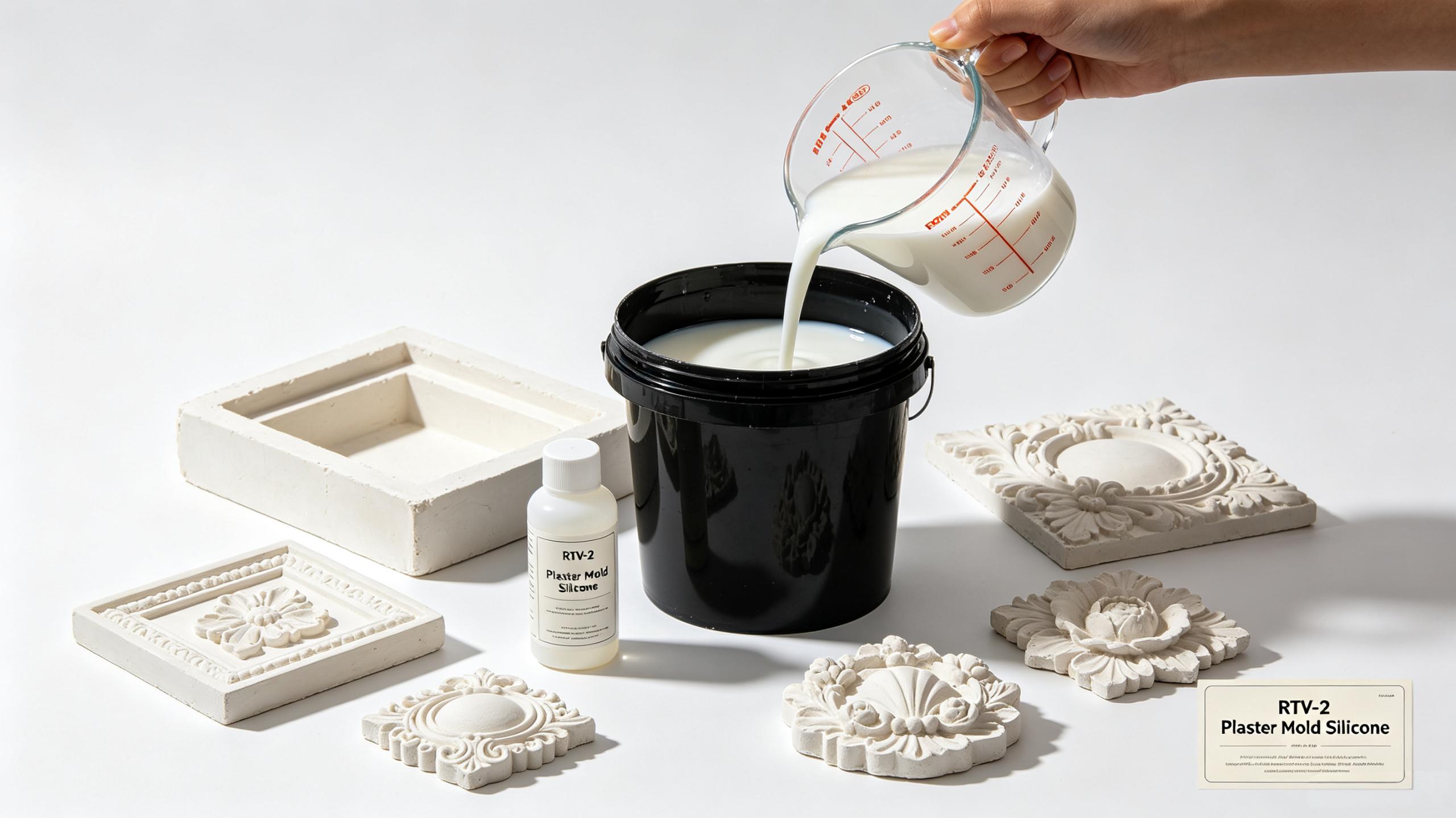
Tear resistance is particularly important for plaster mold silicone. Unlike soap or wax products, cured plaster is hard and brittle. During demolding, operators need to stretch and open the silicone mold to release the rigid gypsum piece. If the silicone material has poor toughness, it may tear after only a few demolding cycles, leading to frequent mold replacement, increased labor cost and production interruption. High‑quality plaster craft mold silicone is formulated with enhanced tear resistance. It can withstand repeated stretching, bending and demolding, which helps extend mold life and reduce overall consumable cost. For mass production, this advantage can significantly improve production efficiency and lower unit cost.
Another important benefit is flexible demolding performance. After the gypsum slurry cures, the finished product becomes hard and fragile. If the mold material is too rigid, demolding becomes difficult and the risk of breakage increases. Silicone molds are elastic and can be gently opened around complex shapes, allowing the plaster artwork to be removed more completely. This reduces chipping, edge damage and the need for extensive repairing and polishing. As a result, manufacturers can spend less time on post‑treatment and achieve more consistent finished quality.
This type of mold silicone is suitable for a wide range of plaster craft applications, including relief decorations, vintage floral ornaments, cultural and creative souvenirs, teaching models, small architectural components and custom artwork molds. It can be used to make simple one‑piece pour molds as well as multi‑piece split molds for complex undercut shapes. Compared with addition‑cure platinum silicone, condensation‑cure plaster mold silicone offers competitive cost and higher operation tolerance, making it more accessible to small and medium‑sized manufacturers.
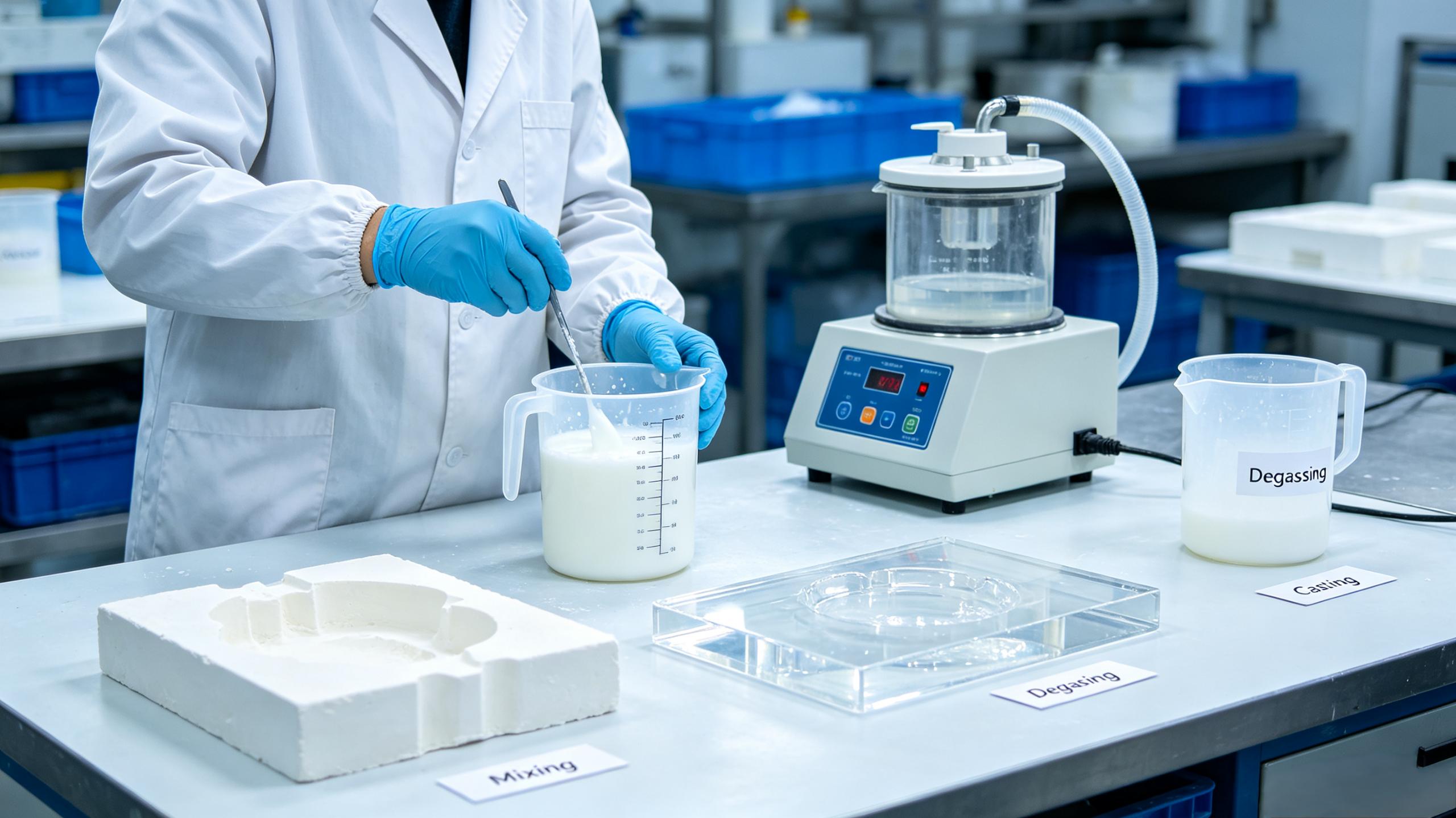
However, some users still encounter common problems such as incomplete curing, inner stickiness, air bubbles and early cracking. In many cases, these issues are caused by non‑standard operation rather than product defects. Condensation‑cure silicone is sensitive to catalyst mixing ratio. Operators should strictly follow the recommended proportion provided by the manufacturer. Arbitrarily increasing or reducing the catalyst amount may cause abnormal curing speed, poor cross‑linking and degraded mold performance.
Thorough mixing is also essential. The base silicone and catalyst should be mixed evenly to avoid local curing problems. Vacuum degassing after mixing is strongly recommended to remove trapped air bubbles. If air bubbles remain in the silicone, they may form small pits or holes on the inner mold surface, which will then appear on the finished plaster product. After the silicone mold is demolded from the prototype, it is advisable to allow sufficient post‑curing aging before pouring gypsum slurry. This can help reduce shrinkage risk and improve long‑term dimensional stability.
Many plaster craft products are currently exported to international markets through cross‑border B2B platforms. Overseas buyers often pay close attention to material safety, batch stability and supporting technical documents. Qualified plaster mold silicone from formal manufacturers can provide MSDS, SGS and other compliance documents, which help international buyers evaluate material safety and production reliability. This enables domestic plaster craft suppliers to better meet export requirements and expand into global markets.
Users should also understand the limitations of condensation‑cure silicone. It is mainly designed for plaster, craft and artwork mold making. During storage and operation, contact with sulfur‑containing, tin‑containing and certain catalyst‑contaminated substances should be avoided, as these may cause curing inhibition. Moreover, manufacturers should not select raw materials only based on the lowest price. Low‑quality silicone may have high shrinkage, poor tear resistance and unstable curing performance, which can increase production cost in the long run. It is more reasonable to choose silicone with suitable hardness according to product size, shape complexity and production frequency.

August 31, 2026

August 25, 2026

September 28, 2026
Email to this supplier
August 31, 2026
August 25, 2026
September 28, 2026
Privacy statement: Your privacy is very important to Us. Our company promises not to disclose your personal information to any external company with out your explicit permission.
Fill in more information so that we can get in touch with you faster
Privacy statement: Your privacy is very important to Us. Our company promises not to disclose your personal information to any external company with out your explicit permission.