







Send Message
Privacy statement: Your privacy is very important to Us. Our company promises not to disclose your personal information to any external company with out your explicit permission.
 Shenzhen Hong Ye Jie Technology Co., Ltd
English
Keywords: Craft sculpture Mold Silicone, sculpture casting silicone, RTV-2 Liquid Mold Silicone rubber, cultural craft duplication silicone, low shrinkage mold silicone
Key Sentences: Craft sculpture mold silicone is a two-component condensation room-temperature vulcanized Liquid silicone rubber, which is the core material for mold making and replication in sculpture and cultural & creative handicraft industry.
With the continuous development of domestic cultural tourism & creative industry, garden sculpture and decorative handicraft sectors, the market demand for sculpture artworks, relief ornaments and portrait crafts keeps rising. Traditional sculpture relies on hand carving, which requires a long production cycle and is hard to realize mass replication. Mold silicone solves the pain points of mass production of sculpture crafts. HONG YE craft sculpture mold silicone, with stable material performance, has become the preferred mold making material for numerous sculpture studios and cultural & creative factories.
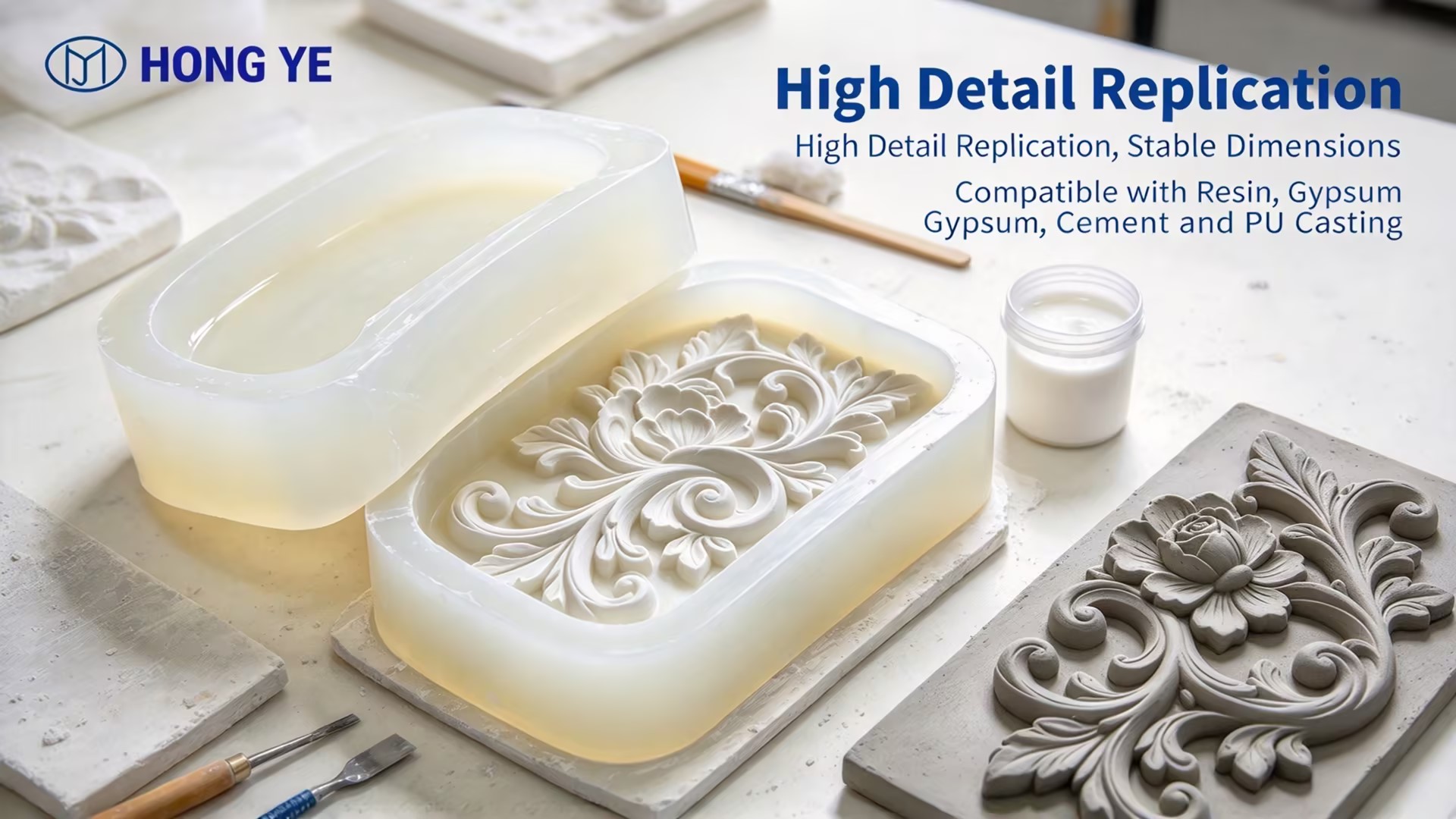
Craft sculpture mold silicone is RTV-2 two-component condensation liquid silicone rubber, consisting of component A silicone base and component B curing agent. After mixing according to specified weight ratio, it can be fully cured at room temperature without high-temperature heating equipment, lowering the equipment threshold of sculpture mold making. From small cultural reliefs and art portraits to large garden cement sculptures, this silicone can be well adapted. It supports two mainstream molding processes: brush molding and pouring molding. For sculpture prototypes with complex surface textures and intricate details, the liquid silicone has moderate fluidity. It can fully fill every tiny grain on the prototype surface. After curing, it restores the sculpture surface texture 1:1 with outstanding detail reproduction.
In actual sculpture mass production, the tear resistance of the mold directly determines mold service life and production cost. After curing, HONG YE craft sculpture mold silicone has good elasticity and high tear strength. It is not easy to tear or form gaps during demolding. A qualified silicone mold can be reused for multiple casting cycles, effectively cutting the unit mold cost of handicrafts. Meanwhile, the product features excellent low shrinkage performance with small volume change after curing. It maintains stable dimension during mass production without size deviation, satisfying standardized mass production requirements of handicrafts.
Wide material compatibility is another highlight of this silicone. It can work well with resin, gypsum, cement, PU and various other casting materials. Many sculpture factories produce resin ornaments, gypsum portraits and cement garden reliefs at the same time. Only this one type of sculpture mold silicone can cover mold making demands of multiple product categories and simplify material procurement management. It can flexibly serve both small-batch hand-making by individual sculpture creators and assembly line mass production in large cultural & creative factories.
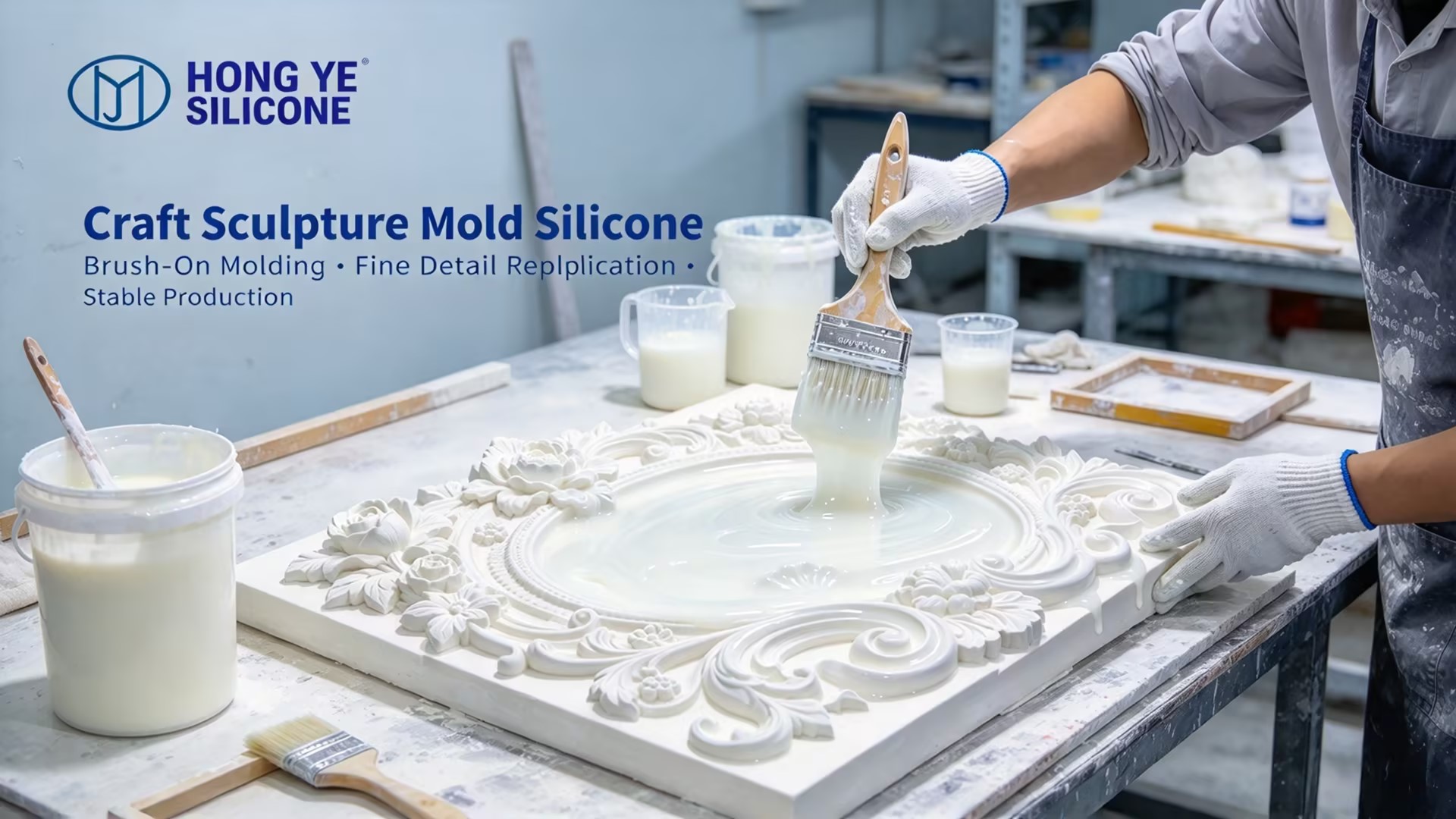
The sculpture mold making process is simple and easy to operate. First, clean dust and impurities on the sculpture prototype surface. Gypsum and cement prototypes need uniform release agent coating to prevent silicone penetration and adhesion. Weigh component A and curing agent according to weight ratio, stir thoroughly and then remove bubbles with vacuum machine to eliminate air bubbles inside silicone. For complex relief sculptures, brush-on molding is generally adopted: apply a thin first silicone layer to fully cover all texture details. After the surface layer becomes tack-free, apply silicone layer by layer until reaching required thickness. Use gypsum or fiberglass to make outer supporting mold. For simple-shaped sculpture prototypes, build a frame and pour silicone in one step. After full curing, remove outer mold and peel off silicone mold gently. Then the mold can be used repeatedly to cast handicrafts.
Attention should be paid to operation specifications during industry application. The proportion of curing agent cannot be adjusted arbitrarily. Too much curing agent will make the mold brittle and reduce tear resistance; insufficient curing agent leads to slow curing or incomplete solidification. Silicone material must avoid contact with sulfur, amine, organotin substances, which will cause silicone poisoning and failure to cure. Keep ventilation in operation site and avoid prolonged direct skin contact with silicone. Raw materials should be hermetically stored in cool and dry place, away from heat source and direct sunlight to guarantee storage stability.

August 31, 2026

August 25, 2026
Email to this supplier
August 31, 2026
August 25, 2026
Privacy statement: Your privacy is very important to Us. Our company promises not to disclose your personal information to any external company with out your explicit permission.
Fill in more information so that we can get in touch with you faster
Privacy statement: Your privacy is very important to Us. Our company promises not to disclose your personal information to any external company with out your explicit permission.