







Send Message
Privacy statement: Your privacy is very important to Us. Our company promises not to disclose your personal information to any external company with out your explicit permission.
 Shenzhen Hong Ye Jie Technology Co., Ltd
English
Keywords: Gypsum cement Mold Silicone, RTV‑2 condensation‑cure mold silicone, GRC component casting silicone, cement relief mold rubber, gypsum decorative mold silicone, low‑shrinkage high‑tear mold silicone
Key Sentences: Gypsum & cement mold silicone is RTV‑2 condensation‑cure two‑component Liquid silicone rubber, specially used for mass‑production molding of gypsum, cement and GRC decorative components.
In exterior building decoration, garden landscape and interior furnishing industries, gypsum lines, cement reliefs and GRC components are widely‑used decorative products. Natural stone carving suffers from high cost and long lead‑time. Most decorative factories adopt casting reproduction technology for mass‑production. Mold material quality directly determines pattern clarity, dimensional accuracy and mold service life. Therefore, gypsum & cement mold silicone becomes essential consumable for building‑material and craft manufacturers.
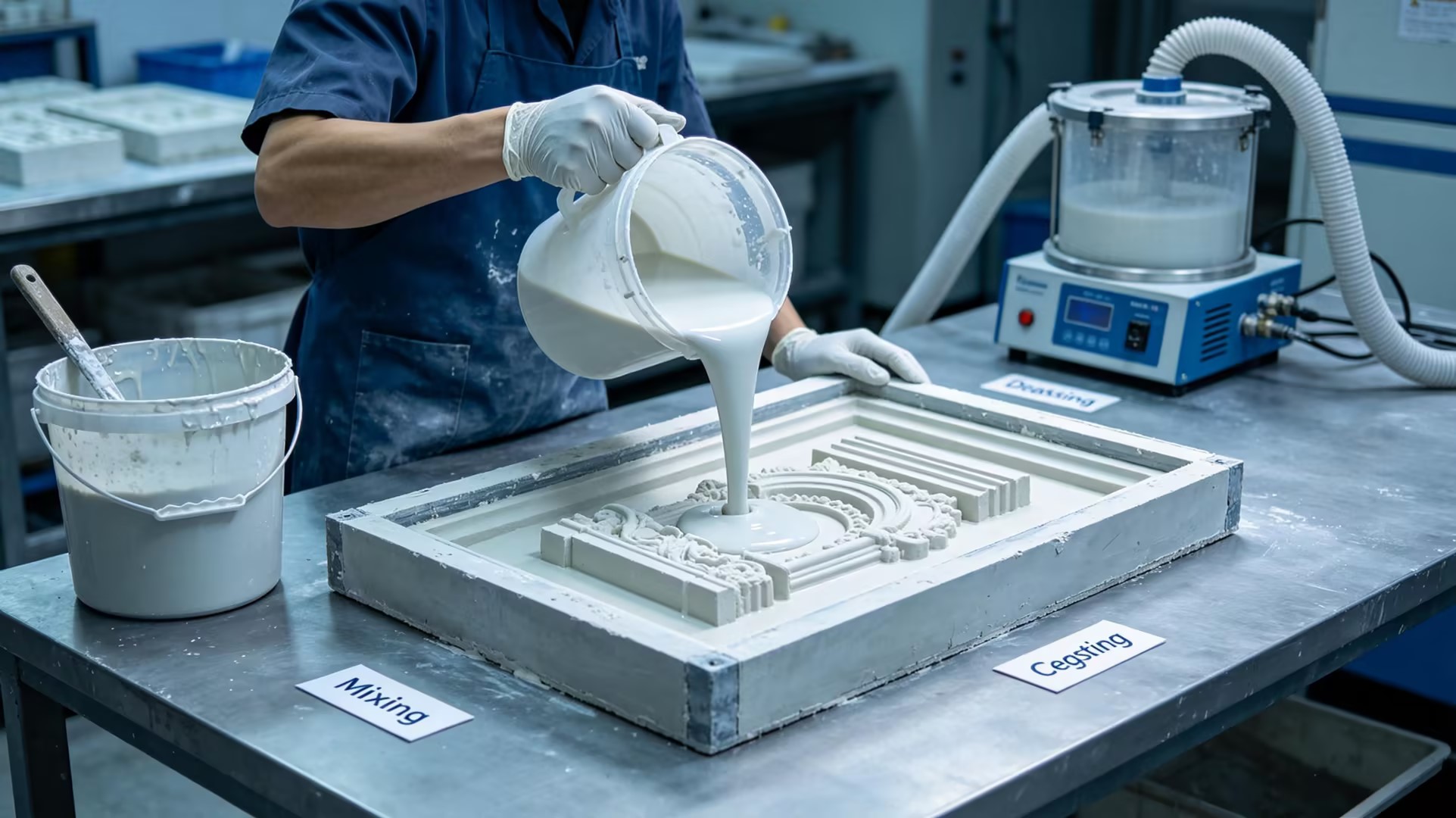
Gypsum & cement mold silicone is RTV‑2 condensation‑cure two‑component liquid silicone rubber composed of base rubber and matched curing agent. It cures under room temperature without high‑temperature vulcanizing equipment, which is user‑friendly for large factories and small craft workshops. Operators mix silicone with curing agent as required, stir thoroughly and perform vacuum degassing. Apply brushing or pouring method to cover art prototype. After full curing, flexible silicone mold can be separated. Then pour gypsum, cement, GRC or resin slurry into the mold. Once solidified, decorative components can be mass‑produced after demolding.
Fine‑detail reproduction is core advantage of gypsum‑cement mold silicone. European‑style components and relief panels contain delicate carvings, deep grooves and sharp undercut structures. Ordinary rubber or simple mold materials often lose fine textures and blurred edges after casting, which ruin finished appearance. Gypsum‑cement mold silicone owns suitable flow property. It fills every tiny groove on prototype and copies all surface textures after curing. Cast gypsum and cement components show rich layered patterns and restore original design perfectly.
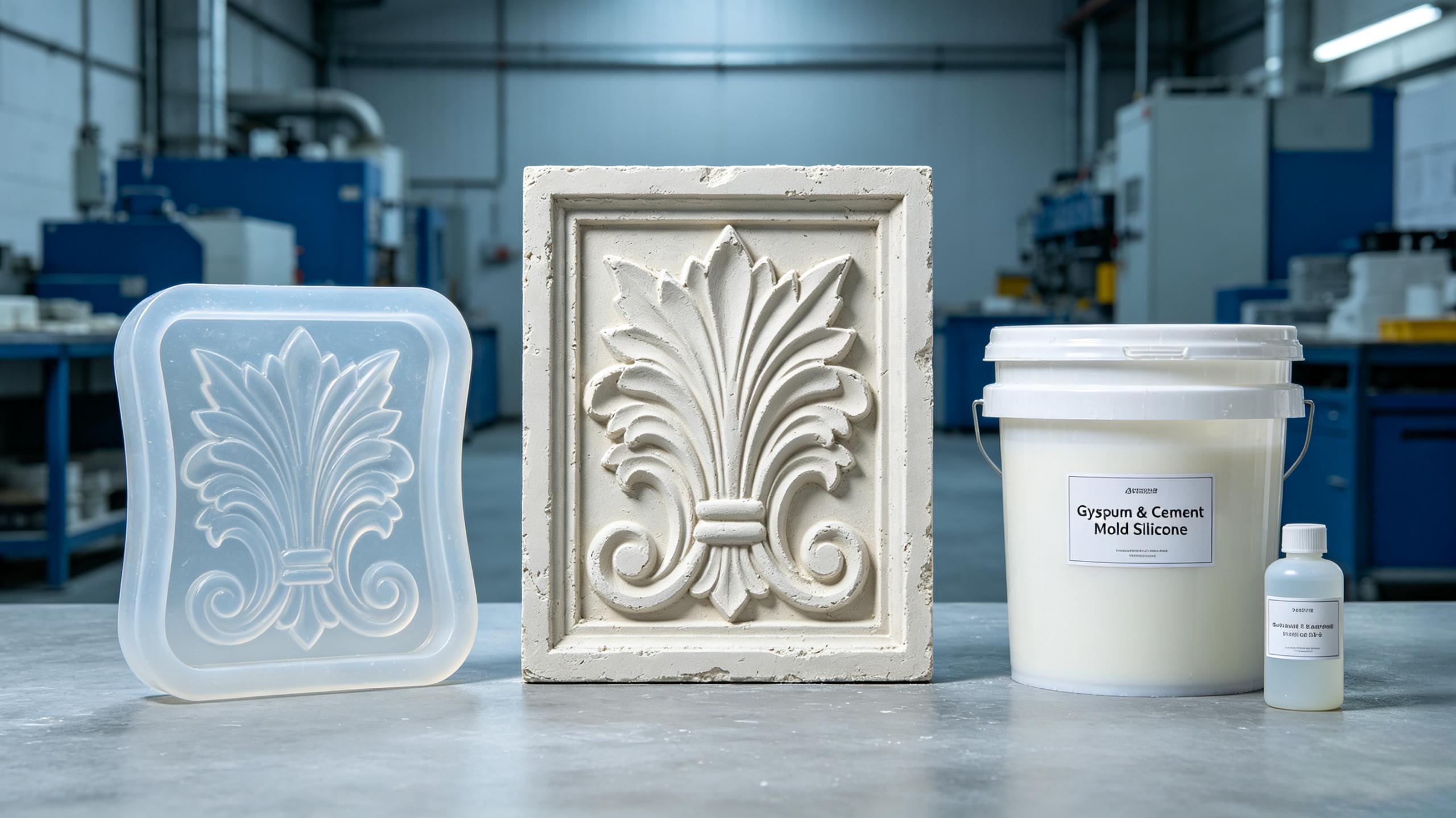
Gypsum and cement castings are heavy after curing. Molds need frequent stretching and bending during demolding, so tear resistance decides mold reuse cycles. Premium gypsum‑cement mold silicone delivers excellent tear strength and resists cracking in repeated demolding cycles. Its low‑shrinkage performance keeps mold dimension stable, ensuring consistent size among batches. One qualified silicone mold can support dozens to hundreds of casting cycles, saving material cost from frequent re‑molding for large project orders.
This mold silicone features broad material compatibility. It works well with gypsum, ordinary cement, GRC composite material and resin. Application scenarios cover exterior GRC relief panels, gypsum decorative moldings, garden cement sculptures & flower pots, interior background wall reliefs, European‑style fireplace parts and cultural‑tourism stone‑imitating ornaments. It is suitable both for large‑volume export orders and small‑batch prototype sampling.
Even with premium material performance, standardized process control cannot be ignored. Follow official specification for catalyst mixing ratio. Insufficient curing agent leads to incomplete curing and sticky mold surface. Excessive curing agent shortens working time and causes premature gelling before pouring. Stir thoroughly including container bottom and side walls to avoid partial uncured defects from uneven mixing.
Liquid silicone traps plenty of air during stirring, vacuum degassing must not be skipped. Air bubbles left inside mold will create holes and missing patterns on gypsum‑cement finished goods. Complete brushing or pouring work, wait for full curing before demolding. Demold gently, do not tear sharp‑corner parts violently. For large‑size component molds, add fiberglass backing outside silicone layer to improve overall stability.
Many manufacturers suffer short mold lifespan and incomplete patterns. These problems are often caused by general‑purpose silicone rather than dedicated gypsum‑cement mold silicone optimized for building‑material conditions. General silicone cannot meet requirements on tear resistance, alkali resistance and shrinkage rate. Gypsum‑cement dedicated mold silicone is formula‑tuned for architectural casting, balancing flowability, detail reproduction, tear resistance and low shrinkage for building‑material production.

August 31, 2026

August 25, 2026

October 14, 2026

September 28, 2026
Email to this supplier
August 31, 2026
August 25, 2026
October 14, 2026
September 28, 2026
Privacy statement: Your privacy is very important to Us. Our company promises not to disclose your personal information to any external company with out your explicit permission.
Fill in more information so that we can get in touch with you faster
Privacy statement: Your privacy is very important to Us. Our company promises not to disclose your personal information to any external company with out your explicit permission.