

Ms. zhou

What can I do for you?

Ms. zhou

What can I do for you?

Home> Company News> How to Choose the Right Condensation Cure Silicone for Tire Pattern Molds

How to Choose the Right Condensation Cure Silicone for Tire Pattern Molds

2026,08,25
Keywords: Condensation cure tire pattern Mold Silicone, RTV-2 condensation mold silicone, tire pattern mould making silicone

Key Sentences: Selecting professional condensation cure silicone is the key to improving tire pattern replication accuracy, extending mold service life and reducing industrial production costs.

The global tire mold manufacturing industry continues to pursue high-precision replication and cost-effective batch production. Tire patterns consist of intricate fine grooves, dense serrations and complex undercut structures, which set high standards for mold material flexibility, precision and durability. As a mainstream industrial material, condensation cure RTV-2 tire pattern mold silicone is widely used for tire proofing and mold replication. Thanks to its stable performance, room-temperature curing and excellent cost performance, it has become the preferred solution for global tire mold factories.

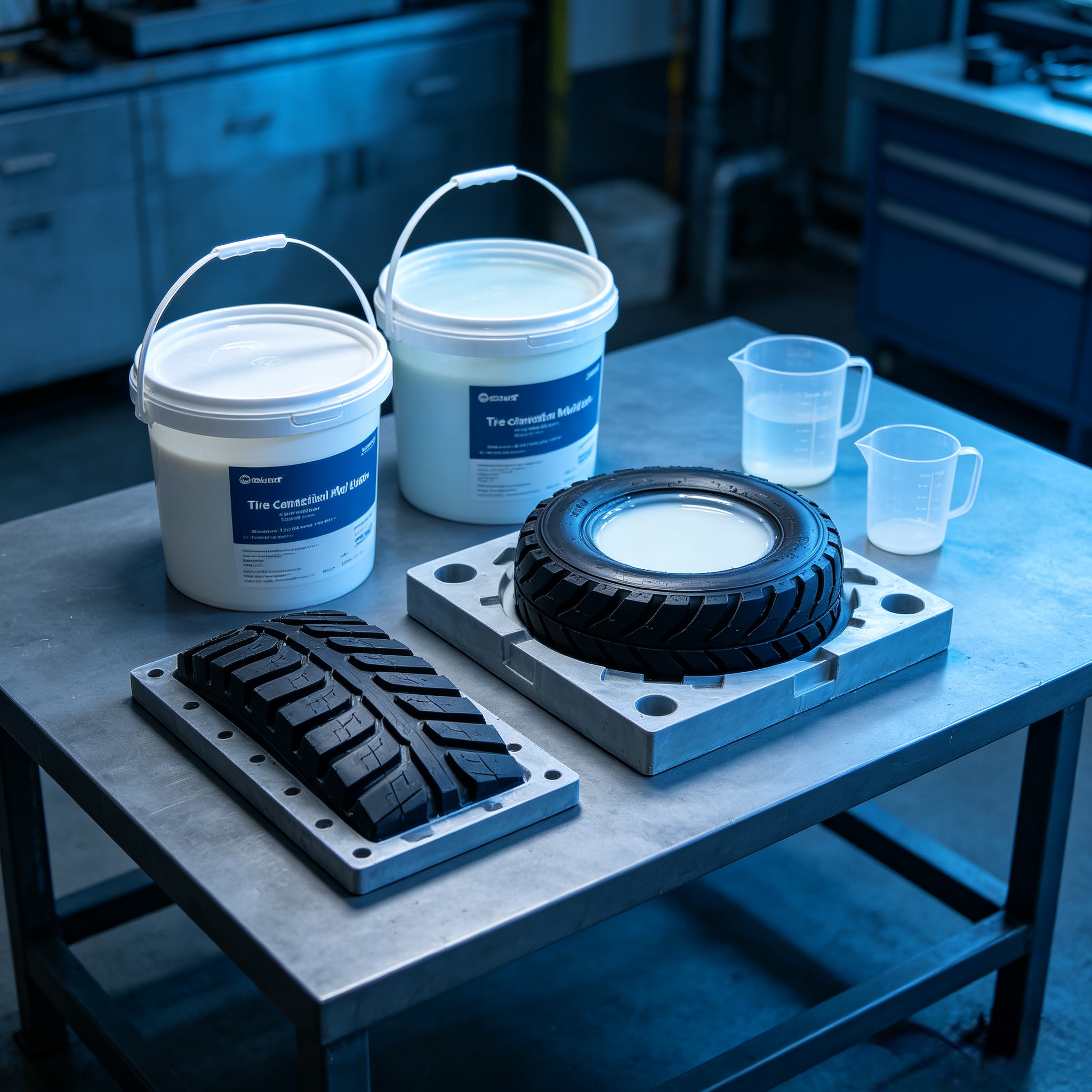
Tire Pattern Mold Silicone 5

Industrial mold silicone is mainly divided into condensation cure and addition cure types. Different from high-cost addition silicone for high-end precision manufacturing, condensation cure tire mold silicone adopts a tin curing system with a standard mixing ratio of 100:2 to 100:4. It cures naturally at room temperature with low viscosity and outstanding fluidity, capable of fully restoring delicate tire textures. It perfectly meets the molding demands of passenger car, engineering and agricultural machinery tires, covering most industrial molding scenarios.
Hardness matching is the primary rule for selecting tire mold silicone. The optimal hardness range for tire pattern replication is 15–25 Shore A, with 20 Shore A as the universal mainstream grade. For engineering and agricultural tires with deep grooves and complex undercuts, 15–18 Shore A soft silicone is ideal. Its excellent elasticity reduces demolding resistance and effectively prevents thin pattern corners from tearing, solving the common damage problem of complex tire molds.
For conventional passenger car tires with moderate pattern complexity, 20 Shore A condensation silicone balances tear strength, structural stability and demolding performance, suitable for daily proofing and medium-batch production. For simple shallow-groove tires requiring high dimensional stability, 22–25 Shore A high-hardness silicone is more applicable. Its high rigidity effectively reduces mold deformation and ensures long-term production consistency.
Tear strength is the core performance index of tire pattern mold silicone, directly determining mold service life and product qualification rate. Tire thin-walled grooves bear strong tensile force during demolding. Professional industrial condensation tire mold silicone features a tear strength of 18–22kN/m. Low-quality silicone with poor tear resistance easily causes corner collapse and pattern fracture, leading to frequent mold replacement and higher comprehensive production costs.
Fluidity and linear shrinkage rate are key to molding precision. High-quality low-viscosity condensation silicone can penetrate micron-level fine grooves and fully replicate tiny tire details. Qualified tire mold silicone controls linear shrinkage within 0.5%, avoiding dimensional deviation and unqualified finished products, which guarantees stable batch production quality.
Standardly processed condensation cure tire silicone can achieve 30–80 stable molding cycles. Improper operations such as excessive curing agent addition and random silicone oil blending will make molds brittle, reduce tear resistance and shorten service life significantly. Standardized operation procedures are essential to maximize material performance.
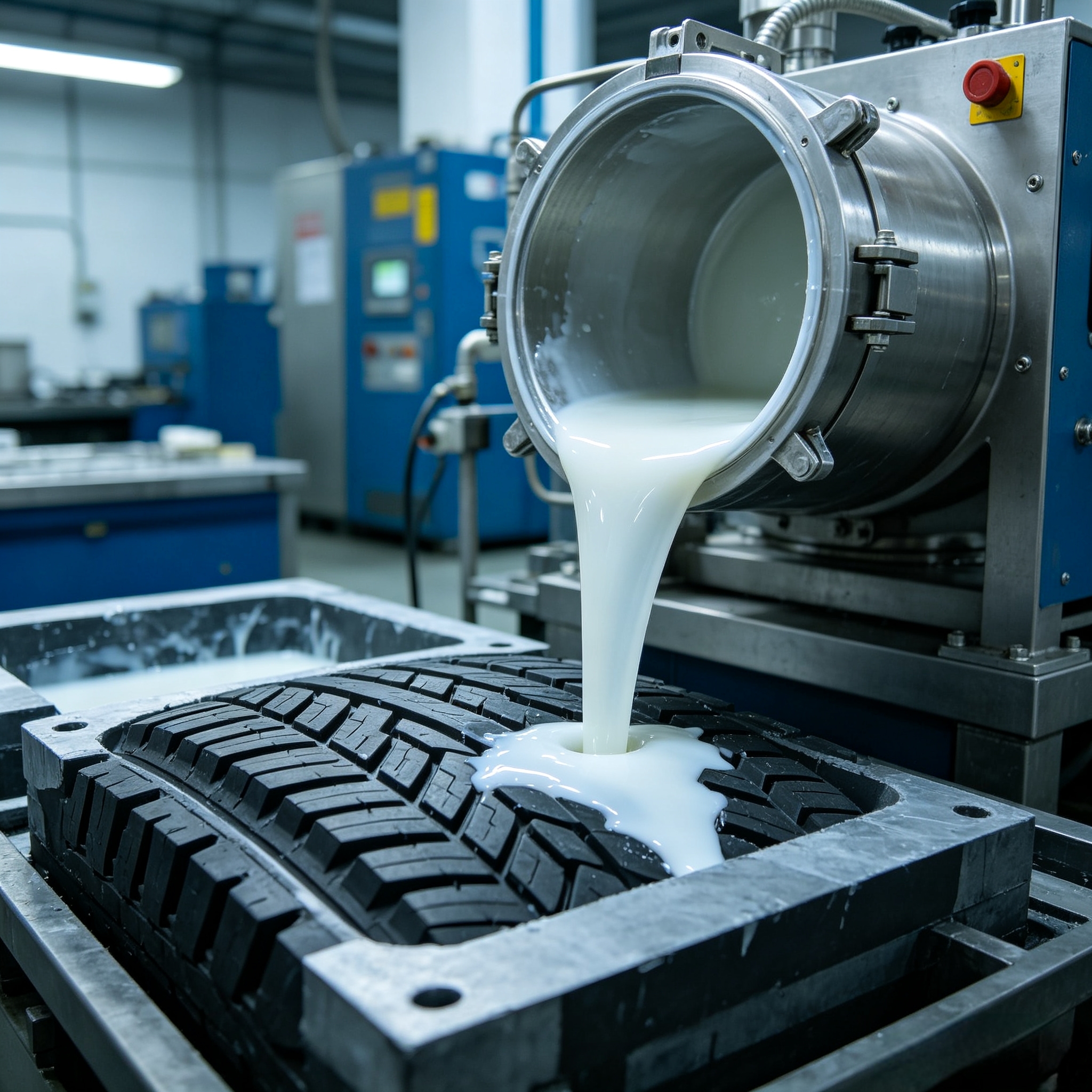
After precise proportional mixing, vacuum defoaming is required to eliminate internal bubbles and avoid mold pore defects. A 24-hour full aging treatment after complete curing completes internal cross-linking reactions, effectively reducing later deformation and improving mold toughness and durability.

Tire Pattern Mold Silicone 4

Compared with addition cure silicone, RTV-2 condensation silicone has lower cost, simpler operation and stronger environmental adaptability, fully adapting to large-scale industrial tire molding. Manufacturers keep optimizing formulas to balance high tear resistance, low shrinkage and high fluidity for better molding effects.
In conclusion, scientific selection of condensation cure tire pattern mold silicone must match the actual tire pattern structure and production scale. Factories should focus on comprehensive performance including hardness, tear strength, fluidity and shrinkage rate instead of only pursuing low prices. Combined with standardized curing and aging processes, high-quality condensation silicone can effectively extend mold life, improve replication accuracy and reduce production costs, boosting the high-efficiency development of the global tire mold manufacturing industry.
Contact Us

Author:

Ms. zhou

E-mail:

alice@szrl.net

Phone/WhatsApp:

+86 18938861889

Popular Products
You may also like
Related Categories

Email to this supplier

Subject:
Email:
Message:

Your message must be between 20-8000 characters

  • Send Inquiry

Copyright © 2026 Shenzhen Hong Ye Jie Technology Co., Ltd All rights reserved. Privacy Policy

We will contact you immediately

Fill in more information so that we can get in touch with you faster

Privacy statement: Your privacy is very important to Us. Our company promises not to disclose your personal information to any external company with out your explicit permission.

Send