







Send Message
Privacy statement: Your privacy is very important to Us. Our company promises not to disclose your personal information to any external company with out your explicit permission.
 Shenzhen Hong Ye Jie Technology Co., Ltd
English
With the expanding application of global humanoid‑robot technology, a growing number of bionic robots are deployed in poorly‑ventilated enclosed science museums, closed live‑stream studios, cultural‑tourism exhibition venues and children‑oriented science‑popular sites. These projects impose strict requirements on indoor‑air‑quality and public‑environmental safety. Even fully cured conventional bionic silicone contains trace volatile small‑molecule substances. Inside closed spaces with limited air exchange, volatiles keep accumulating and produce obvious pungent plastic odor, causing visitor discomfort. For children‑focused interactive robots, environmental‑safety concerns become more prominent. Many projects have to invest extra budget on fresh‑air ventilation facilities or shorten equipment opening hours, which brings higher construction and continuous‑operation costs. Volatile‑substance and odor issues have become tangible material bottlenecks restricting bionic‑robot deployment in enclosed‑indoor scenarios.
Conventional bionic silicone shows several inherent drawbacks when used inside closed venues. First, volatile substances accumulate and generate strong plastic smell in poorly‑ventilated environment, worsening visitor experience. Second, indoor‑air‑quality acceptance tests face higher risk of index out‑of‑limit for museum and cultural‑tourism projects. Third, children‑oriented interactive scenarios raise higher safety expectation for odor and volatile indicators. Fourth, additional ventilation‑system investment increases project capital expenditure and ongoing‑operation energy consumption.
Enclosed‑display wax figures, indoor teaching mannequins and long‑term‑exhibited simulation props also suffer from volatile‑substance accumulation and unpleasant odor under closed‑cabinet conditions. Such exhibits run for long periods with limited air circulation, calling for bionic‑skin materials featuring low‑emission and low‑odor performance. The market is in urgent need of bionic silicone balancing simulation fidelity, dynamic performance and enclosed‑space environmental safety.
Targeting the pain points of volatile‑substance release and odor for enclosed‑indoor bionic devices, Shenzhen Hong Ye Jie Technology has carried out multiple rounds of raw‑material screening, cross‑linking‑process optimization and enclosed‑chamber volatile‑emission testing, and launched low‑odor low‑VOC environment‑friendly bionic skin silicone. By selecting low‑volatile raw‑materials and improving cross‑linking completeness, the product reduces residual unreacted small‑molecule components to realize lower VOC release and faint intrinsic odor.
Its core strengths lie in low‑odor low‑VOC performance, enclosed‑space adaptability and human‑contact safety. Different from ordinary silicone relying on heavy ventilation to dilute volatiles, this material reduces volatile contents at formula source, avoiding heavy plastic‑smell build‑up under poor‑ventilation conditions. Meanwhile it preserves decent bionic‑simulation effect, low‑shrinkage texture reproduction as well as tear‑resistance and anti‑fatigue dynamic performance for stable robot facial micro‑expression and joint‑movement operation.
It achieves perfect combination of realistic bionic texture, dynamic mechanical capability and enclosed‑space environmental safety. Ultra‑low curing shrinkage reproduces fine pores and skin lines. Upgraded color‑stable formula prevents yellowing and darkening under long‑time lamp irradiation. Good tear‑resistance and anti‑fatigue performance prevent cracking and peeling upon repeated deformation. The finished material meets public‑indoor‑scene human‑contact safety requirements and fits children‑oriented science‑popular application scenarios, lowering acceptance‑test risks for exhibition projects.
Compatible with pouring and brushing molding processes. Volatile‑emission performance remains stable across batches with high finished‑product yield, suitable for prototype development and mass procurement for exhibition‑venue projects.
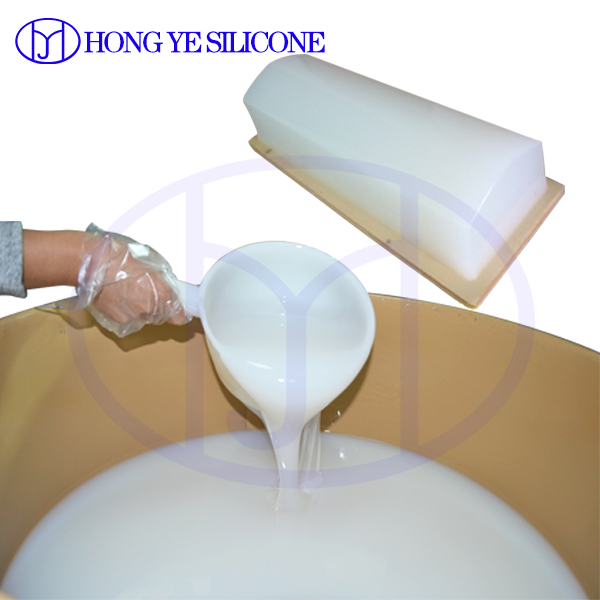
This low‑odor low‑VOC environment‑friendly bionic skin silicone is widely applicable for humanoid robots in enclosed science museums, closed live‑stream‑studio robots, children‑oriented science‑popular interactive bionic devices, simulation dolls in sealed exhibition venues and indoor teaching simulation mannequins, for projects requiring limited‑ventilation condition and high indoor‑environmental‑safety standards.
Hong Ye Jie Technology keeps iterating full‑series differentiated bionic‑silicone formulas covering durability, moisture‑resistance, high‑toughness, clean‑grade and environmental‑safety requirements. Free‑of‑charge sample testing, customized VOC‑performance adjustment, skin‑tone matching and full‑process technical support are offered, helping global enclosed‑indoor‑scene human‑robot and cultural‑tourism‑science‑popular projects resolve volatile‑substance and‑odor challenges and reduce project acceptance‑risk and long‑term‑operation burden.


August 31, 2026

August 25, 2026

November 13, 2026

November 11, 2026
Email to this supplier
August 31, 2026
August 25, 2026
November 13, 2026
November 11, 2026
Privacy statement: Your privacy is very important to Us. Our company promises not to disclose your personal information to any external company with out your explicit permission.
Fill in more information so that we can get in touch with you faster
Privacy statement: Your privacy is very important to Us. Our company promises not to disclose your personal information to any external company with out your explicit permission.