







Send Message
Privacy statement: Your privacy is very important to Us. Our company promises not to disclose your personal information to any external company with out your explicit permission.
 Shenzhen Hong Ye Jie Technology Co., Ltd
English
Against the booming background of DIY cultural‑and‑creative industry, cold‑process handmade soap and decorative art soap are gaining growing global popularity. Different from ordinary daily‑use soap, art‑styled handmade soap is decorated with 3D relief, flower shapes and cartoon figures, widely used for gift giving, home‑use personal care and creative merchandise. High‑performance mold material is the key to producing exquisite shaped soap in batches. As a mainstream raw material for soap workshops and factories worldwide, condensation‑cure handmade soap mold silicone provides reliable support for mass production of decorative soap products.
The whole production workflow of handmade soap includes prototype carving, silicone mold making, soap base pouring, cooling curing, demolding and post‑finishing. The quality of molds directly decides the final appearance and pass rate of finished soap products. Traditional gypsum molds are low‑cost but brittle. They fail to capture delicate textures and break easily after limited runs. Rigid resin molds own high hardness yet lack flexibility. When demolding soap pieces with undercuts and complex relief details, the soap body is highly likely to crack or chip, resulting in high scrap rate. Therefore, more and more soap producers turn to condensation‑cure handmade soap mold silicone to tackle these manufacturing bottlenecks.

Handmade soap mold silicone belongs to two‑part RTV‑2 condensation‑cure silicone rubber, consisting of silicone base compound and matched catalyst. It achieves full curing under room temperature without heating equipment, and fits both small DIY studios and large‑scale manufacturing plants. Before curing, the liquid silicone shows outstanding fluidity. After fully mixed with catalyst, it can flow and wrap every surface of the original prototype, faithfully replicating tiny textures including petal veins, figure outlines and star‑shaped embossments. Whether it is simple geometric design or complicated angel and rose‑shaped art soap prototypes, this casting silicone can realize high‑fidelity reproduction. Soap pieces poured from such molds own sharp lines and sophisticated surface details, restoring the original designer’s concept to the maximum extent.
Non‑stick property and easy demolding are two critical performance indicators for soap‑making silicone. Soap base contains grease and saponified ingredients. Low‑grade mold material tends to stick to soap bodies, which causes breakage and surface defect during demolding and brings material waste. High‑quality condensation‑cure soap mold silicone forms a smooth inner surface after vulcanization, and will not react or adhere to soap base. In most operating conditions, extra release agent is not required. Operators can take out finished soap products completely by slightly bending the flexible silicone mold. It greatly reduces trimming and polishing work and improves overall production efficiency.
Tear resistance determines how many cycles one silicone mold can run. Most decorative handmade soap designs contain undercuts, hollows and raised structures, which require stretching and bending during demolding. Inferior cheap silicone rubber has poor toughness and tends to crack after only a few casting cycles, forcing frequent remolding and raising comprehensive production expenses. Formulation‑optimized handmade soap mold silicone features enhanced tear resistance. It resists rupture under repeated stretching and bending. A well‑made silicone mold can sustain dozens of soap‑pouring cycles. Compared with disposable gypsum molds, it greatly lowers long‑term consumable investment and brings obvious cost advantages for mass soap manufacturers.

This mold silicone fits multiple soap categories, including cold‑process soap, glycerin soap, essential‑oil soap and gift‑oriented art soap. It supports molds for flowers, animals, cartoon characters and relief ornaments. Users can make simple block pour‑on molds as well as multi‑piece composite molds, handling both plain and highly complicated prototypes. Compared with addition‑cure platinum silicone, condensation‑cure soap‑making silicone has competitive purchasing cost and higher operation tolerance. It is equally suitable for small creative workshops and industrial‑scale soap factories.
Nevertheless, many users encounter common failures such as incomplete curing, inner stickiness, air bubbles and early cracking. Most problems are not caused by product defects, but non‑standard operation. Condensation‑cure silicone is sensitive to catalyst mixing ratio. Operators must follow recommended proportion strictly; arbitrary over‑dosage or under‑dosage leads to abnormal curing speed and degraded mold performance. Base silicone and catalyst must be blended thoroughly. Vacuum degassing after mixing is strongly recommended to eliminate trapped air bubbles, avoiding pits and holes on final soap goods. Fresh‑made silicone molds need sufficient post‑curing aging before soap pouring, to minimize latent shrinkage risk and prolong mold service life.
Nowadays large quantities of elaborately‑crafted handmade soap are exported globally via cross‑border B2B platforms. Overseas buyers pay high attention to texture reproduction, material safety and batch stability of mold raw materials. Qualified handmade soap mold silicone from formal manufacturers can provide MSDS, SGS and other supporting documents to satisfy export compliance requirements, helping domestic soap producers deliver premium goods to international markets.
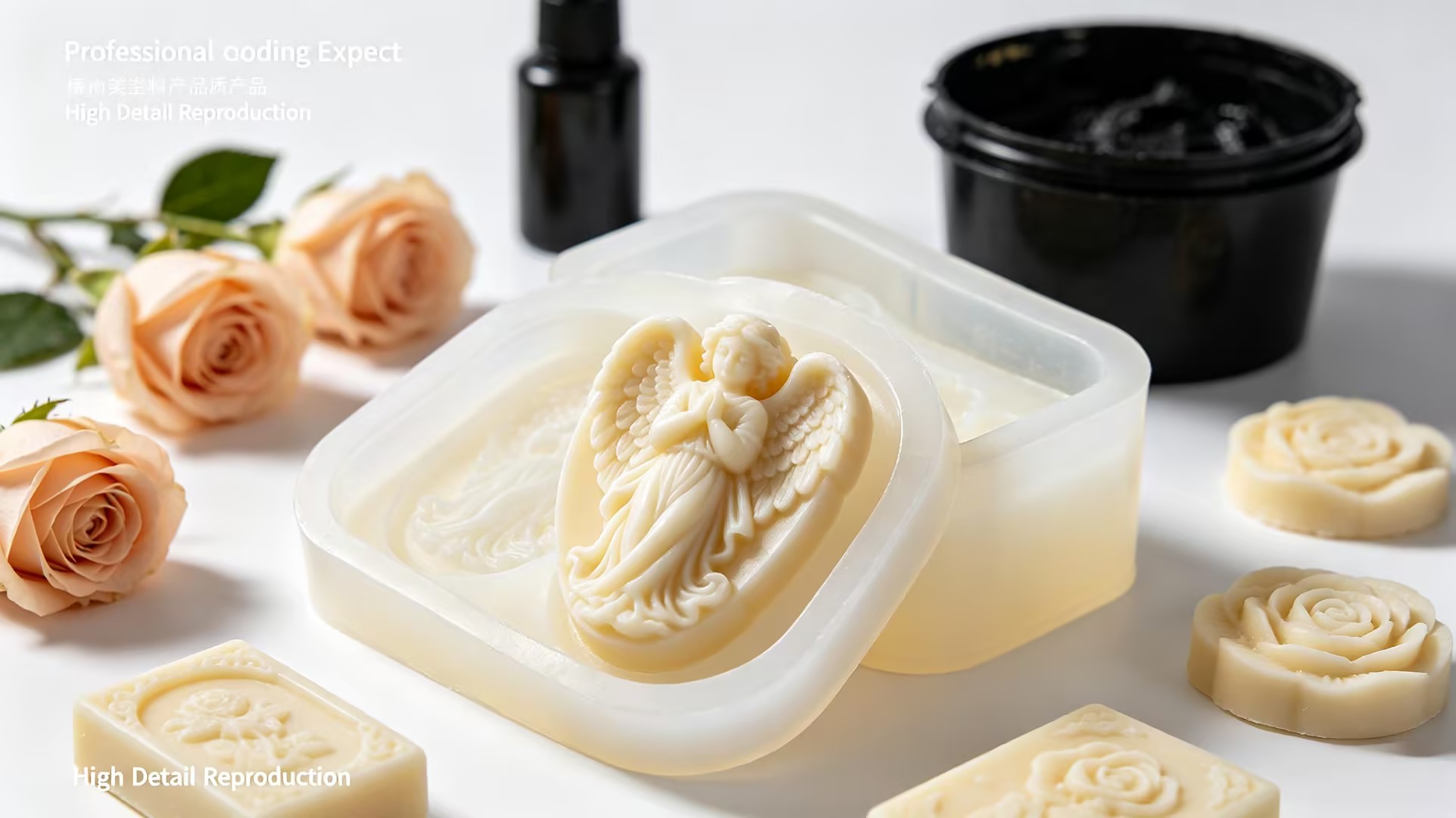
Users should also notice product limitations. This condensation‑cure silicone is dedicated for soap and craft mold‑making. Keep it away from sulfur‑containing and tin‑containing substances to prevent curing inhibition. Do not select raw material only by low price. Cheap inferior silicone brings high shrinkage and weak tear resistance, which increases total manufacturing cost instead. Manufacturers should select silicone with proper hardness matching their soap designs and follow standardized operating procedures to obtain optimal performance.
As consumers pursue higher texture and richer shapes of creative handmade soap, mold‑making material plays an irreplaceable role in the whole supply chain. With fine‑detail reproduction, non‑stick easy‑demolding performance, reusability and cost‑effective advantages, condensation‑cure handmade soap mold silicone connects art prototype design and mass‑produced finished goods. With the continuous growth of creative soap industry, high‑performance casting silicone will keep empowering soap‑making enterprises to launch diversified and exquisite handmade soap products for global markets.

August 31, 2026

August 25, 2026

September 28, 2026
Email to this supplier
August 31, 2026
August 25, 2026
September 28, 2026
Privacy statement: Your privacy is very important to Us. Our company promises not to disclose your personal information to any external company with out your explicit permission.
Fill in more information so that we can get in touch with you faster
Privacy statement: Your privacy is very important to Us. Our company promises not to disclose your personal information to any external company with out your explicit permission.