Product Summary
Our liquid silicone foam is a professional two-part addition curing RTV2 silicone rubber, formulated with flowable A and B components for chemical foaming. It delivers a 2–7 times controllable foaming ratio, uniform cell structure, low shrinkage, and stable performance from -65℃ to 200℃. Eco-friendly and easy to process, it suits industrial sealing and soft product manufacturing. We also supply Mold Making Silicone, Pad Printing Silicone, Electronic Potting Compound, Human Body Silicone and robot silicone.
Product Overview
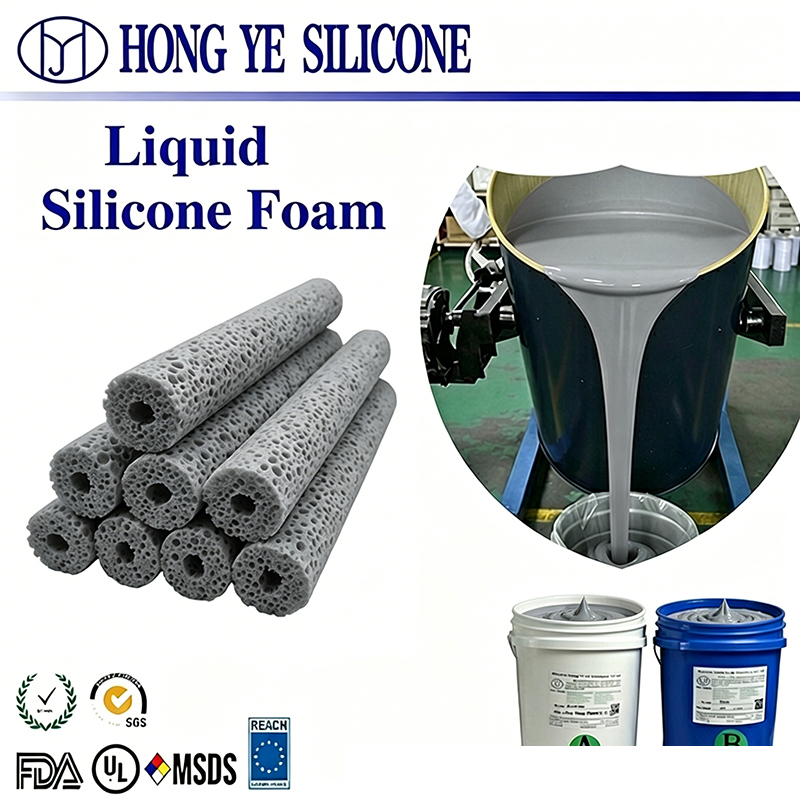
Liquid Silicone Foam , also known as Foamed Silicone , silicone foam and Silicone Sponge, is a high-performance platinum-cured dual-component silicone material. It adopts chemical foaming and high-temperature vulcanization molding, featuring ultra-light texture, soft hand feel and no limitation on finished product thickness. Simple to operate and 100% eco-friendly, it is a cost-effective solution for mass production. As a full-series silicone manufacturer, we provide one-stop customized silicone material solutions for global B2B buyers.
Technical Specifications
This industrial-grade Addition Curing Silicone supports a standard 1:1 mixing ratio for A and B components. It achieves stable 2–7 times volume expansion with ultra-low linear shrinkage and durable rebound elasticity. It maintains stable soft elasticity in long-term service at -65℃ to 200℃. Boasting excellent chemical inertness, electrical insulation and flame retardancy, the material is non-toxic, non-corrosive and radiation-free, fully complying with global industrial safety standards.
Core Product Features & Competitive Advantages
Different from ordinary foam materials, our RTV Silicone Foam features evenly distributed foam pores, stable structural performance and zero migration or atrophy after curing. It has outstanding heat and cold resistance, adapting to complex and extreme working environments. The safe, eco-friendly formula supports long-term repeated use, reducing product replacement costs. Strict batch quality control guarantees stable performance, lowering defective rates and comprehensive production costs for manufacturers.
Application Scenarios & Buyer Benefits
Widely applicable across multiple industries, it manufactures industrial gaskets, sealing strips, foam boards and printing sponge rollers. It also produces automotive interior parts, sofa cushions, silicone insoles, kids pillows and fitness equipment accessories. Additionally, it serves as high-quality filling material for robot silicone crafts. Its simple processing workflow effectively improves production efficiency and reduces raw material waste for global clients.
Step-by-Step Usage Instructions
1. Fully stir component A and component B separately to eliminate material stratification caused by long-term storage.
2. Mix the two components at a standard 1:1 ratio and stir evenly for 2–3 minutes to ensure uniform blending.
3. Perform vacuum defoaming on the mixed glue and use it immediately to avoid premature coagulation affecting production.
Certifications & Compliance
The product strictly conforms to ISO9001, CE and RoHS international quality and environmental standards. Every batch undergoes rigorous pre-production testing and pre-shipment full inspection to ensure stable and reliable global application.
Customization Options
We provide professional customization services for foaming ratio, hardness and formula parameters to meet personalized production demands of different industries and processing technologies.
Production Process & Quality Control
We adopt standardized raw material screening, precise proportional batching, constant-temperature vulcanization and multi-stage quality inspection. The whole-process QC monitoring system ensures consistent batch stability and reliable performance of liquid silicone foam.
Packaging & Storage Guidelines
Standard packaging: A component 25KG/200KG/250KG drums; B component 25KG/200KG drums. Transported as non-dangerous goods. Store in sealed, cool and dry environments. Avoid direct sunlight, high-temperature baking and contact with water, sulfur, phosphorus and heavy metal impurities.
FAQ
Q1: What causes curing failure of addition curing liquid silicone foam?
A1: This silicone foam is sensitive to specific impurities. Contact with water, sulfur, phosphorus, tin and heavy metal substances will hinder curing. Long-term sunlight exposure and high-temperature baking will also damage structural stability.
Q2: What makes your foamed silicone superior to peer products?
A2: Our product features controllable 2–7 times stable foaming, uniform pores, zero shrinkage and migration, wide temperature adaptability and complete international certifications, with consistent quality as our mainstream mold making silicone and pad printing silicone products.






 Shenzhen Hong Ye Jie Technology Co., Ltd







 Contact Now