



Blue Industrial Vacuum Cleaner H-Class HEPA Filter Gel Seal
$12-20 /Kilogram
| Payment Type: | T/T,Paypal |
| Incoterm: | FOB,Express Delivery,DDP,CIF,EXW |
| Min. Order: | 10 Kilogram |
| Transportation: | Ocean,Land,Air,Express |
| Port: | SHENZHEN |
Share:


 Shenzhen Hong Ye Jie Technology Co., Ltd
English
$12-20 /Kilogram
| Payment Type: | T/T,Paypal |
| Incoterm: | FOB,Express Delivery,DDP,CIF,EXW |
| Min. Order: | 10 Kilogram |
| Transportation: | Ocean,Land,Air,Express |
| Port: | SHENZHEN |
Share:
| Selling Units | : | Kilogram |
| Package Type | : | 1/5/20/25/200KG |
| Picture Example | : |


|
The file is encrypted. Please fill in the following information to continue accessing it
PRODUCT OVERVIEW:
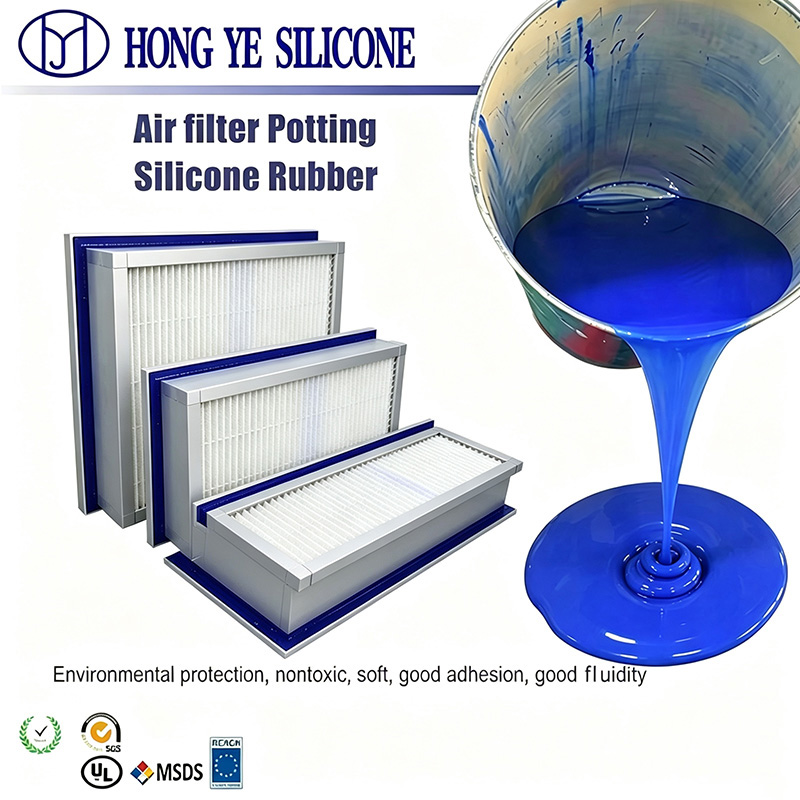
Hong Ye HY-9400 is a premium two-component addition-cure platinum catalyzed blue jelly gel specifically engineered for sealing H-class HEPA filters in industrial and hazardous-duty vacuum cleaners used for asbestos, silica and pharmaceutical dust recovery. With a buttery soft consistency measured at a penetration of 200 plus or minus 30 (0.1mm) and a durably tacky surface, HY-9400 delivers reliable long-life sealing and protection that outlasts conventional gaskets, foams and caulks by a wide margin. The product is mixed 1:1 by weight, self-levels after pouring, cures at room temperature within 4 to 6 hours, and requires no vacuum degassing, making it a straightforward high-performance gel to deploy on production lines worldwide. This low-viscosity fast-flow variant levels rapidly, penetrates narrow gaps and intricate cavities and is well suited to automated meter-mix dispensing. It is formulated to meet the specific demands of the vacuum cleaner filter housing gel seal, withstanding repeated motor vibration, abrasive dust and filter changes while keeping a leak-free downstream path. Backed by Hong Ye's nearly 20 years of silicone manufacturing expertise and supplied to customers in over 60 countries, HY-9400 combines the performance of premium imported gels with the cost efficiency, short lead time and responsive technical support of a Chinese manufacturer. Whether you are running a first sample trial or ramping to full production, Hong Ye delivers consistent batch-to-batch quality, comprehensive documentation and application engineering support from first sample through full production.
KEY FEATURES:
• Low viscosity fast flow formulation fills narrow gaps and intricate cavities quickly, self-levels with minimal bubbles and suits automated dispensing.
• Excellent electrical insulation with dielectric strength above 20 kV/mm
• Repairable and reworkable: old gel can be topped up with fresh gel without full removal
• No VOC emissions during or after cure, suitable for enclosed cleanroom and medical environments
• Can be heat-cured at 60-80C for 30-60 minutes to shorten demolding time in mass production
• Resistant to ozone, UV, moisture, salt spray and common cleanroom cleaning agents
• 1:1 mix ratio by weight, easy to meter with manual or automated dispensing equipment
• Compatible with automated meter-mix dispensing equipment for high-volume production lines
• Third-party test reports including RoHS, REACH, FDA and LFGB available on request
• Self-leveling after pouring, no vacuum degassing required, saving process time and equipment
• Wide service temperature range from minus 60C to 200C with stable flexibility and tack
• Low exotherm and low shrinkage during cure, avoiding stress on delicate components and seals
• Soft, non-brittling cured mass absorbs vibration and impact instead of transferring it to parts and seals
TECHNICAL PARAMETERS:
| Model | Color | Viscosity (mPa·s) | Operation Time (min) | Cure Time (h) | Penetration (0.1mm) | Tack | Mix Ratio | Density (g/cm³) |
| HY-9400 | Blue | 1200+/-300 | 20-40 | 4-6 | 200+/-30 | High | 1:1 | 0.98 |
DETAILED APPLICATION SCENARIOS:
H-class (HEPA) industrial and hazardous-duty vacuum cleaners are used to recover asbestos, silica, welding fume and pharmaceutical dust where none of the captured material may leak back into the air the operator breathes. These machines use HEPA filters sealed into the drum or motor head; Hong Ye HY-9400 is poured into the filter housing gel channel so the filter element seats into the soft blue gel and seals the downstream air path. This eliminates the bypass that occurs as foam gaskets age, protecting operators from hazardous dust and keeping the equipment within H-class requirements.
Vacuum service is mechanically harsh: the motor produces strong continuous vibration, filters are knocked and pulse-cleaned, and abrasive dust and debris load the housing during every shift. HY-9400 absorbs motor vibration rather than cracking, holds its seal through repeated filter removal and refit, and does not shed particles into the clean downstream air. When the HEPA filter is replaced, the tacky self-healing gel re-seats around the new filter quickly, helping service teams maintain a certified dust-tight machine without replacing molded gaskets each time.
The blue gel gives technicians a quick visual confirmation that the HEPA is correctly seated in the channel, which is important for equipment operators liable under occupational dust regulations. Hong Ye supplies the gel in practical kit sizes for maintenance and OEM assembly, with straightforward 1:1 mixing that suits both production-line dispensing and field service, plus COA, RoHS and REACH documentation to support equipment certification and rental-fleet maintenance programs.
APPLICATION & OPERATING INSTRUCTIONS:
Step 1 Surface preparation: Clean the gel channel or cavity with a dry lint-free cloth. Remove all oil, water, rust, latex residue and old cured silicone fragments. For new housings, wipe with isopropyl alcohol and allow to fully dry.
Step 2 Component B preparation: Before each use, stir component B thoroughly for at least 2 minutes. The pigment and catalyst can settle during storage; incomplete stirring causes color variation and soft or uncured spots.
Step 3 Weighing and mixing: Weigh A and B at exactly 1:1 by weight using a calibrated scale. Pour into a clean mixing container and stir slowly for 3 to 5 minutes, scraping the sides and bottom regularly. Avoid fast stirring which introduces bubbles.
Step 4 Pouring: Pour the mixed gel slowly along one end of the channel or cavity and allow it to self-level. Do not pour from a height to avoid air entrapment. For long channels or large cavities, pour in sections.
Step 5 Curing: Allow 4 to 6 hours at 25C before handling or assembly. Full physical properties develop after 24 hours. No vacuum degassing is required. Heat-curing at 60-80C for 30-60 minutes shortens the cycle for mass production.
Step 6 Contamination prevention: Use polyethylene, nylon or nitrile gloves. Never use natural rubber latex gloves. Avoid contact with sulfur-containing materials, amines, phosphorus compounds, tin-cured silicone and PVC, as these can inhibit the platinum catalyst and prevent cure.
After the gel has fully cured, the sealed channel, cavity or enclosure is ready for service; no vacuum degassing, post-cure or special equipment is required for standard room-temperature installations. During the first 24 hours, protect freshly poured gel from dust, dripping water and contact with uncured tin-cured silicone or latex. For reliable results, first-time users are encouraged to run a small trial on a spare channel or sample cavity to confirm depth, coverage and handling time before scaling to full production. Hong Ye application engineers can review your housing or component drawings, recommend pour depth and gel grade, and provide a short mixing-and-pouring video or live online guidance for the first batch, helping line operators establish a stable, repeatable pouring process.
PACKAGING:
Standard packaging options include 1kg trial kits (500g A plus 500g B), 5kg kits, 20kg pails, 25kg pails and 200kg drums. Components A and B are supplied in separate containers within each kit, and both are clearly marked to avoid mix-up. Custom packaging, private labeling and kit configurations are available for orders above 200kg, and mixed-A/B cartridges can be prepared for cartridge dispensing. All kits are clearly labeled with batch number, manufacture date, expiry date and safety information. For export orders, packaging meets sea and air freight requirements with English labels, SDS and COA documents included. Trial orders typically ship within 1 to 3 working days, and volume orders within 7 to 10 working days depending on quantity and certification requirements.

QUALITY ASSURANCE & SUPPORT:
Hong Ye has manufactured addition-cure silicone gels in its own ISO 9001 certified facilities since 2005 and supplies customers in more than 60 countries across cleanroom, filtration, electronics and consumer product industries. Every batch of HY-9 series jelly gel is tested for viscosity, mix ratio, cure time, penetration, color and tack before release, and a Certificate of Analysis showing actual measured values ships with every order so incoming-quality teams can verify consistency on receipt. Raw-material inspection, in-process mixing control and finished-product testing form a three-stage quality system that keeps batch-to-batch variation tight for automated production. Standard grades are supported by RoHS 2.0 and REACH SVHC test reports, skin-contact and food-contact grades can be supplied with FDA 21 CFR 177.2600 and LFGB Section 30/31 reports, and ISO 10993 biocompatibility testing can be arranged on request. Our application engineers provide grade selection, sample evaluation, channel or cavity design review, on-site or video pouring guidance and after-sales follow-up, and TDS technical data sheets, SDS safety data sheets and test reports are available before order to support customer qualification, audit and tender processes. Hong Ye welcomes trial sample requests and supports customers from first sample through full volume production.
FREQUENTLY ASKED QUESTIONS:
Q: How long does the gel take to cure and can I speed it up?
A: At 25C the gel reaches touch-dry in 4 to 6 hours and full properties after 24 hours. For mass production, heat-curing at 60 to 80C reduces demolding time to 30 to 60 minutes. Do not exceed 100C as it may cause discoloration or surface defects. Low temperatures below 15C will significantly slow the cure.
Q: Will the gel self-heal after a component is removed and reinserted?
A: Yes. The cured gel remains durably tacky and soft. When a knife edge, flange or insert is lifted, the gel temporarily separates; when reinserted, it flows back around the part within minutes, restoring the airtight or watertight seal. This self-healing property is a key advantage over compressed gaskets and foams during periodic maintenance.
Q: What is the mix ratio and how do I avoid curing problems?
A: Mix components A and B at exactly 1:1 by weight using a calibrated scale, then stir slowly for 3 to 5 minutes while scraping the container walls and bottom. Use nitrile, polyethylene or nylon gloves, never natural latex. Keep the material away from sulfur, amines, phosphorus, tin-cured silicone and PVC, which can inhibit the platinum catalyst and leave sticky or uncured spots.
Q: Can old gel in a tank, channel or housing be topped up or repaired?
A: Yes. If the existing gel is still clean, soft and tacky, wipe the surface with a dry cloth and pour fresh gel on top; the fresh addition-cure gel bonds chemically to the clean cured gel. If the old gel has hardened, dried out, yellowed or become contaminated, remove it completely, clean the channel and refill.
Q: What certifications and test reports are available for export or regulated industries?
A: Standard grades ship with a Certificate of Analysis and RoHS 2.0 and REACH SVHC reports. Skin-contact and food-contact grades can be supplied with FDA 21 CFR 177.2600 and LFGB Section 30/31 reports, and ISO 10993 biocompatibility testing on request; flame-retardant grades meet UL94 V-0. TDS, SDS and test reports are provided before order to support customer qualification and tender processes.
Q: How do I place a trial order and choose the right grade for my application?
A: Most customers start with a 1kg or 5kg trial kit to validate pour depth, cure and sealing or potting performance on the actual part. Share your application, temperature and service environment with our sales engineer and we will recommend the blue high-tack, blue medium-tack or transparent grade that fits your conditions, along with pour-depth guidance and documentation. Trial orders ship within 1 to 3 working days, and once the grade is qualified we can support volume production with stable lead times, custom packaging and private labeling for orders above 200kg.
Q: How often must the gel be replaced when HEPA filters are changed on a vacuum?
A: The gel does not need to be replaced at every filter change. As long as it remains clean, soft and tacky, the self-healing gel re-seats around each new HEPA filter; simply wipe the surface and seat the new filter. If the gel becomes loaded with dust, dries out or loses tack after long service, remove and refill the channel. Most users simply top up with a small amount of fresh gel during routine service.


Privacy statement: Your privacy is very important to Us. Our company promises not to disclose your personal information to any external company with out your explicit permission.
Fill in more information so that we can get in touch with you faster
Privacy statement: Your privacy is very important to Us. Our company promises not to disclose your personal information to any external company with out your explicit permission.



 Contact Now