

Ms. zhou

What can I do for you?

Ms. zhou

What can I do for you?

Home> Company News> Large-scale Liquid Silicone Rubber Company Ranking Guide for 2026

Large-scale Liquid Silicone Rubber Company Ranking Guide for 2026

2026,09,11
Sourcing Liquid silicone rubber for mold making used to mean choosing between a handful of regional suppliers. In 2026, the landscape has shifted dramatically. Global buyers now have access to dozens of manufacturers claiming to deliver consistent quality, competitive pricing, and fast turnaround. The challenge is no longer finding a supplier; it is identifying which liquid silicone rubber companies genuinely deserve a place on a procurement shortlist.

This ranking guide evaluates the factors that separate large-scale, dependable silicone manufacturers from the rest of the market. It covers production infrastructure, certification depth, product range breadth, and export track records to help buyers make informed decisions across GRC, food-grade, candle, soap, and resin mold applications.

## What Defines a Large-scale Liquid Silicone Rubber Company

Scale in the silicone industry is measured by more than revenue figures. The operational markers that matter include production line count, facility size, monthly throughput, and the ability to maintain batch consistency across high-volume orders.

A company operating 20 production lines across approximately 6000 square meters of factory space, producing around 220 tons of silicone rubber per month, represents the tier that professional buyers should target. At this scale, the manufacturer can simultaneously handle orders for food-grade platinum silicone, industrial-grade GRC mold compounds, and custom-colored formulations without cross-contamination or scheduling delays.

Quality management at scale requires structured processes: incoming raw material inspection, in-process viscosity and hardness monitoring, and pre-shipment full inspection. Companies that invest in these systems consistently deliver batch-to-batch uniformity that small workshops cannot match.

## Evaluation Criteria for the 2026 Market
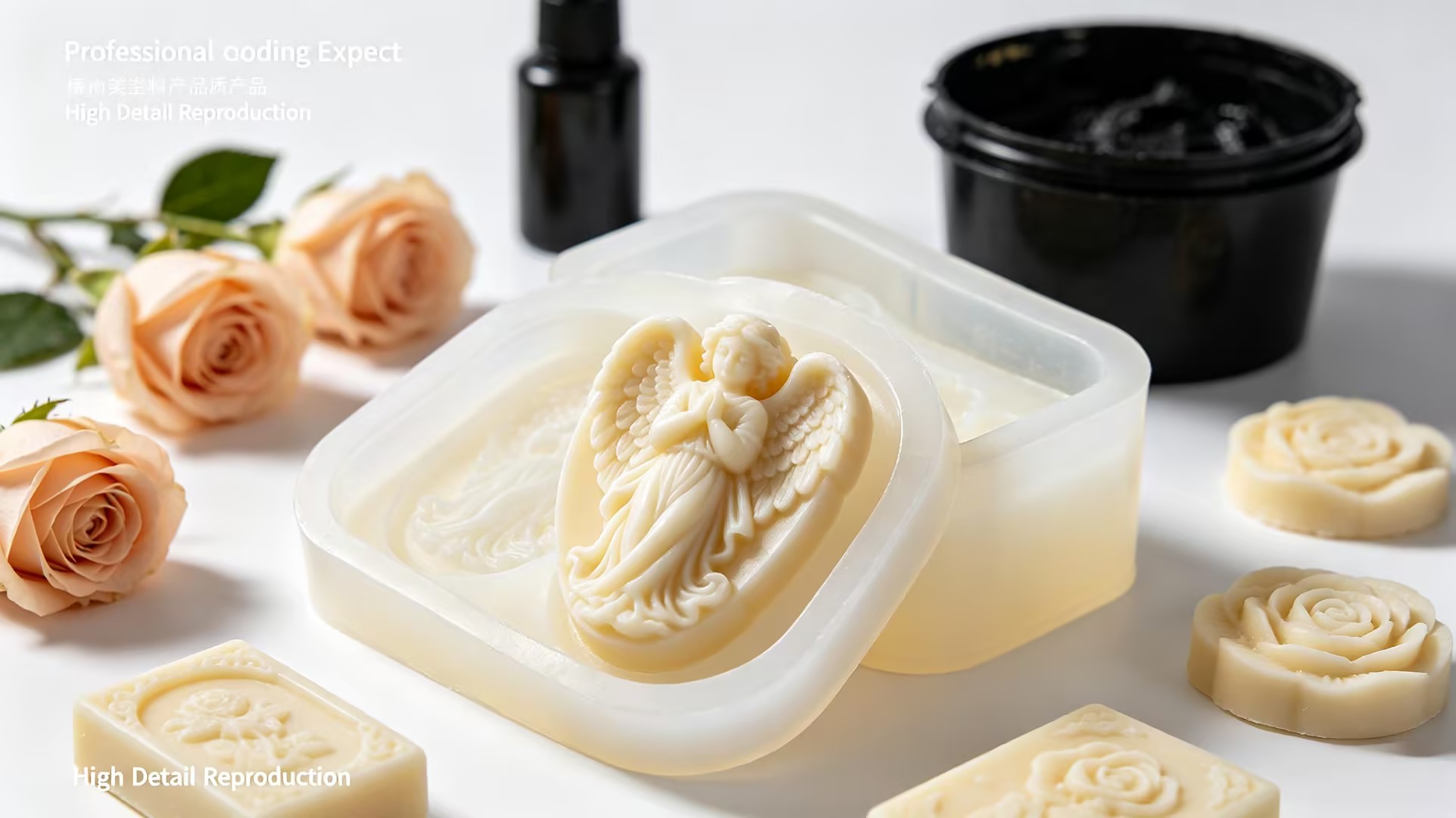
Soap Mold Making Silicone 5

Buyers ranking liquid silicone rubber companies should weight the following dimensions based on their specific needs:

Certification portfolio: ISO9001 for quality management, FDA for food-contact applications, REACH and RoHS for European market compliance, UL for industrial safety, and CE for European distribution. The depth and verifiability of these certifications separate established manufacturers from aspirational ones.

Product range: A comprehensive hardness spectrum from 10A to 50A allows buyers to source all their silicone needs from a single supplier. Companies offering only one or two grades force buyers to manage multiple vendor relationships.

Export experience: Shipping silicone to 138 countries requires not just logistics capability but regulatory familiarity. A manufacturer with extensive export history understands documentation requirements, packaging standards, and customs considerations across different regions.

Customization capability: The ability to adjust hardness, color, mixing ratio, and packaging specifications based on customer requirements indicates a mature production and R&D infrastructure.

## Supplier Category Comparison

The market segments into three primary categories, each with distinct characteristics:

| Factor | Trading Companies | Small Workshops | Large Manufacturers |
|--------|------------------|-----------------|---------------------|
| Price structure | 15-30% above factory | Lowest on small orders | Competitive at volume |
| Batch consistency | Depends on upstream source | Variable between batches | Controlled, documented |
| Certification depth | Pass-through copies | Often incomplete | Full set, independently verifiable |
| Technical support | Limited | Minimal | Full TDS, SDS, COA provided |
| Customization | Constrained by source | Flexible but unvalidated | Structured, with sampling |
| Supply reliability | Subject to source disruptions | Limited capacity | 220 tons monthly capacity |

For buyers who prioritize consistent quality, compliance documentation, and supply security, large-scale manufacturers clearly outperform the alternatives. The modest price premium over trading companies or workshops is offset by reduced risk of production disruptions, failed molds, and compliance issues.

## Segment-specific Recommendations

GRC and architectural concrete: Prioritize manufacturers with 35A-50A hardness grades and proven supply records to construction material distributors. Low shrinkage and high tear strength are non-negotiable for dimensional accuracy in architectural elements.

Food-grade applications: FDA certification is mandatory. Choose companies that can provide certificate numbers for independent verification. Soft grades (10A-20A) work best for chocolate, candy, and cake decoration molds.

Candle and soap molds: Medium-soft grades (15A-25A) balance flexibility with durability. Look for suppliers offering consistent color matching if branded mold colors are part of your product line.

Resin and epoxy crafts: Chemical resistance against casting materials is critical. Medium hardness (25A-30A) with platinum cure chemistry provides reliable performance.

## Practical Evaluation Steps

Request and test samples from shortlisted companies. A 1-2kg sample allows evaluation of cure behavior, hardness accuracy, tear strength, and finished mold quality under your actual production conditions.

Verify certifications through issuing body databases. ISO certificates can be checked against registrar records. FDA clearance numbers are publicly searchable. Do not accept unverified photocopies.

Assess communication quality. Companies that respond to technical inquiries within 24 hours with structured documentation demonstrate the operational discipline needed for reliable long-term partnerships.

Start with trial orders of 20-50kg before committing to full production volumes. This approach validates logistics reliability, packaging integrity, and product consistency at minimal risk.

## Conclusion

The 2026 liquid silicone rubber market rewards buyers who invest in structured supplier evaluation. The companies that rank highest across production scale, certification depth, product range, and export experience consistently deliver lower total cost of ownership despite modest price premiums. For buyers seeking to evaluate large-scale liquid silicone rubber manufacturers, HONG YE SILICONE offers a comprehensive product range, full certification portfolio, and over two decades of manufacturing experience in Addition Curing Silicone rubber.
Contact Us

Author:

Ms. zhou

E-mail:

alice@szrl.net

Phone/WhatsApp:

+86 18938861889

Popular Products
You may also like
Related Categories

Email to this supplier

Subject:
Email:
Message:

Your message must be between 20-8000 characters

  • Send Inquiry

Copyright © 2026 Shenzhen Hong Ye Jie Technology Co., Ltd All rights reserved. Privacy Policy

We will contact you immediately

Fill in more information so that we can get in touch with you faster

Privacy statement: Your privacy is very important to Us. Our company promises not to disclose your personal information to any external company with out your explicit permission.

Send