







Send Message
Privacy statement: Your privacy is very important to Us. Our company promises not to disclose your personal information to any external company with out your explicit permission.
 Shenzhen Hong Ye Jie Technology Co., Ltd
English
Keywords: European cement relief Mold Silicone, cement sculpture silicone rubber, relief casting silicone, low shrinkage mold silicone, high tear resistance mold rubber, large component mold silicone
Key Sentences: Mold silicone for European style cement relief sculpture is a two-component RTV mold silicone specially developed for European carvings, cement reliefs and large outdoor sculptures, which can accurately restore complex textures and deep carving details of reliefs.
As classic artistic components in cultural and tourism buildings, villa exterior walls and garden landscape decoration projects, European-style cement reliefs are favored by decoration engineering companies and sculpture manufacturers for their retro carvings and three-dimensional sense. European reliefs contain a large number of curled patterns, hollow shapes and staggered three-dimensional lines, which put forward extremely high requirements for mold materials. The material must completely reproduce the fine lines, maintain stability during cement pouring and heat release, and the mold has sufficient tear resistance to avoid hooking or tearing the sharp corners of carvings during demolding. Ordinary silicone often suffers from high shrinkage, poor resistance to cement heat release and limited molding times, which cannot meet the mass production demand of European cement reliefs. Therefore, mold silicone for European style cement relief sculpture has become the mainstream molding material in the sculpture industry.
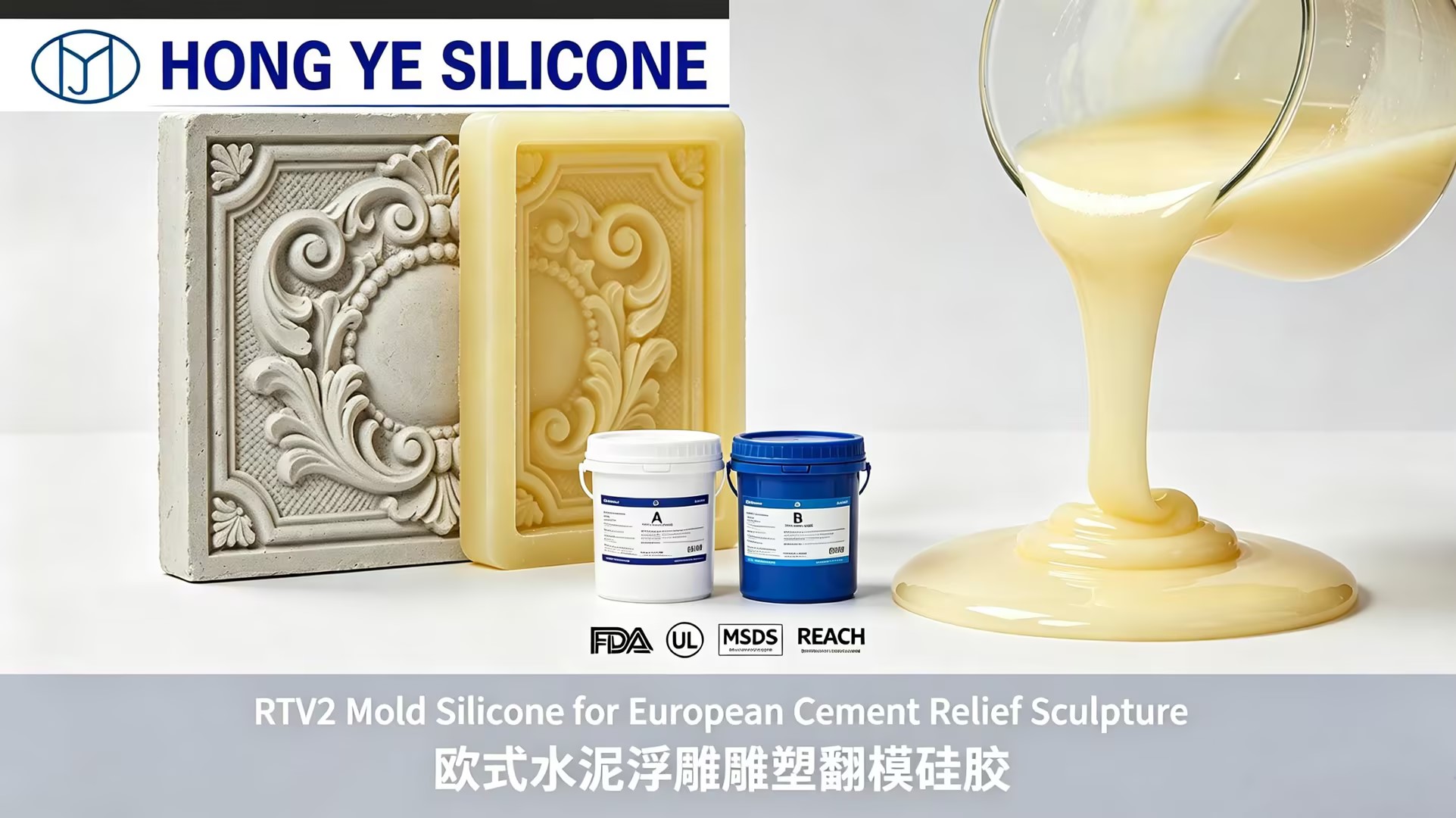
Mold silicone for European style cement relief sculpture is a condensation type room temperature vulcanized silicone rubber. It is mixed in two components. Users can choose brush molding or pouring process according to the size of reliefs. For large-area European wall reliefs and Roman column carvings, brush molding is widely adopted in the industry. Silicone is brushed layer by layer on the surface of the sculpture prototype, and glass fiber cloth is used to enhance the overall strength of the mold to prevent deformation of large curved molds. Small relief ornaments adopt pouring process. The silicone after stirring and defoaming is poured into the mold frame for one-time forming with flexible operation. After curing, the material has soft elasticity. When facing sharp carvings and hollow details of reliefs, demolding is smooth without pulling and damaging the edges of reliefs, ensuring that the pattern of each finished cement relief is highly consistent with the prototype.
The core performance advantages of the product focus on three dimensions: detail reproduction, temperature stability and tear resistance durability. First of all, it has strong performance in reproducing details. The slurry is delicate, which can capture micron-level textures such as curled vines, petals and lines of European reliefs. The reproduced cement relief has no missing corners or blurred patterns, achieving high artistic restoration. Secondly, the low shrinkage performance is stable. The linear shrinkage rate after curing is low. When making molds for large exterior wall reliefs, there will be no size deviation of components caused by silicone shrinkage, ensuring the dimensional accuracy of engineering components. Thirdly, it has excellent tear resistance and heat resistance. Cement paste releases hydration heat during solidification. Ordinary silicone is easy to aging and brittle when exposed to cement heat for a long time. This special mold silicone for reliefs can withstand the temperature change generated by cement hydration. It has high tear resistance and wear-resistant molds. One set of molds can be used for dozens of consecutive moldings, greatly reducing the consumable cost of sculpture factories.
In terms of practical application scenarios, this mold silicone for European cement relief has a wide range of applications. In the field of architectural decoration: villa exterior wall European reliefs, Roman column carvings, cement components for door and window casings, garden landscape wall reliefs. In the field of crafts: European retro relief ornaments, fireplace decorative carvings, three-dimensional decorative reliefs for background walls. A large number of large-scale sculpture projects in cultural tourism also use this silicone to make molds. It can adapt to both indoor decorative small pieces and large outdoor engineering components. Meanwhile, the material is user-friendly in operation. It can be cured at room temperature without complex heating equipment. Sculptors can make molds on site at construction sites to flexibly respond to customized relief projects.
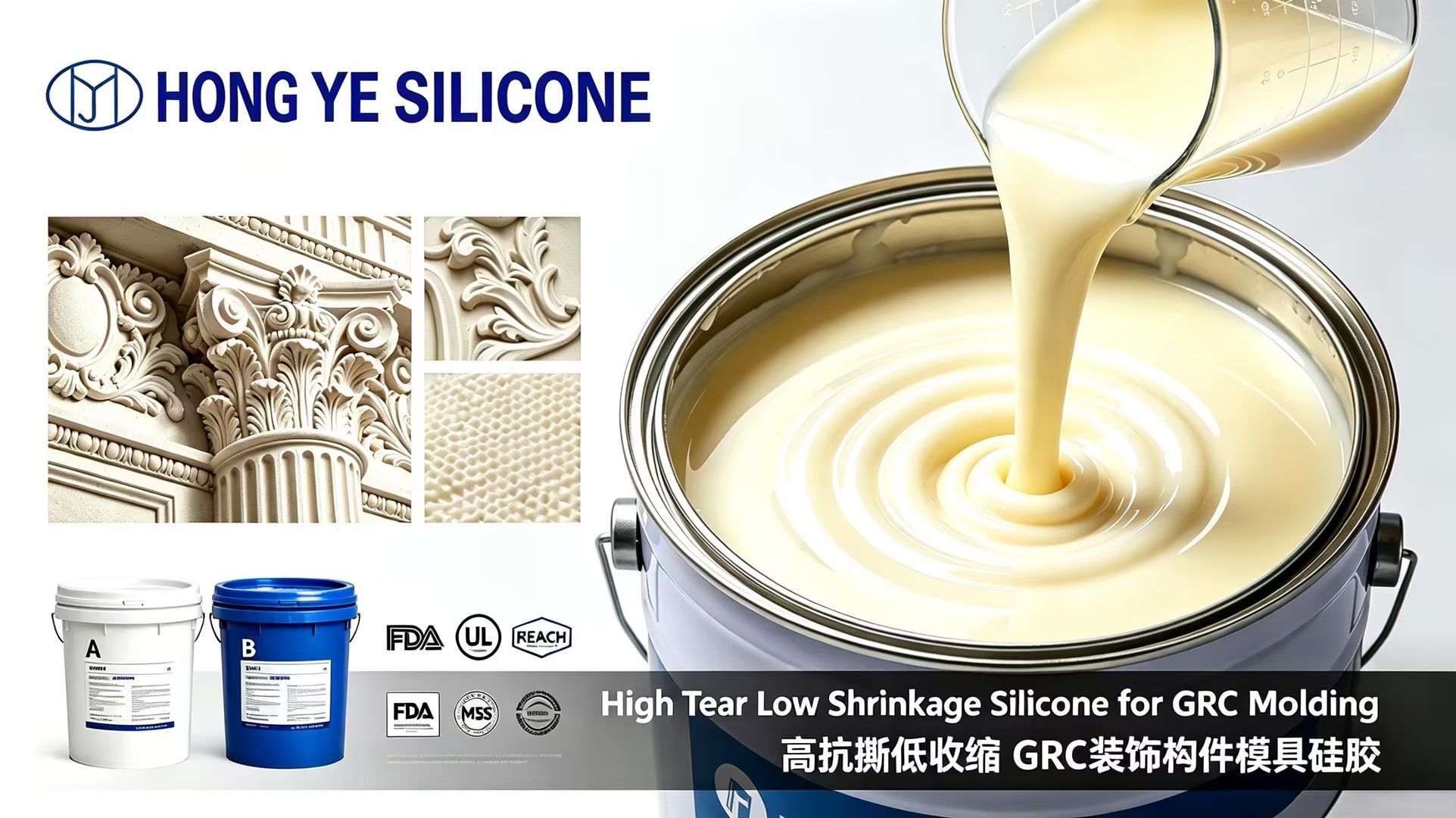
Of course, to give full play to the best performance of silicone, specifications need to be followed in the operation link. First of all, strictly mix component A and component B according to the product ratio, stir evenly, and carry out sufficient vacuum defoaming to avoid bubbles inside the mold, resulting in pinhole defects on the surface of reliefs. For brush molding process, the first layer of silicone should be thinly coated to fully infiltrate the prototype patterns, and the subsequent layers should be thickened with glass fiber cloth for reinforcement. After the mold is made, it is recommended to fully cure before cement pouring. In addition, the prototype surface needs to be coated with special release agent to prevent silicone from adhering to the prototype and damaging the art prototype.

August 31, 2026

August 25, 2026

September 14, 2026
Email to this supplier
August 31, 2026
August 25, 2026
September 14, 2026
Privacy statement: Your privacy is very important to Us. Our company promises not to disclose your personal information to any external company with out your explicit permission.
Fill in more information so that we can get in touch with you faster
Privacy statement: Your privacy is very important to Us. Our company promises not to disclose your personal information to any external company with out your explicit permission.