







Send Message
Privacy statement: Your privacy is very important to Us. Our company promises not to disclose your personal information to any external company with out your explicit permission.
 Shenzhen Hong Ye Jie Technology Co., Ltd
English
In recent years, the global handmade soap, relief soap and cultural soap craft market has expanded rapidly. Consumers are no longer satisfied with ordinary soap bodies. Art soaps with 3D reliefs, floral carvings and portrait shapes have become popular items in home decoration, holiday gifts and souvenir markets due to their aesthetic appeal and experience. With rapid industrial growth, product competition intensifies. The detail delicacy and consistency of relief soaps have become core selling points for brands. The performance of mold materials directly affects the finished effect of soap products, bringing broad market opportunities for soap craft molding silicone rubber.
Prototypes of relief soaps usually contain staggered 3D carvings, delicate petals and exquisite portrait textures, which set high standards for detail reproduction of mold materials. Traditional mold materials often suffer from texture loss, blurred corners and damaged relief details during demolding. Soap craft molding silicone rubber comes in two series: addition-cured (platinum-catalyzed) and condensation-cured (tin-catalyzed). The addition-cured series is environmental-friendly and odorless with no small molecule release. After curing it can safely contact finished soap bodies, making it the first choice for high-end cold process soap and essential oil soap. The condensation-cured series offers high cost performance for mass model development with gypsum and resin prototypes. The product has good fluidity. After mixing and defoaming, it can fully cover the prototype surface and penetrate every tiny relief texture to achieve millimeter-level reproduction. It restores all 3D carvings of the prototype, producing soap products with clean and sharp lines without missing textures or bubble defects.
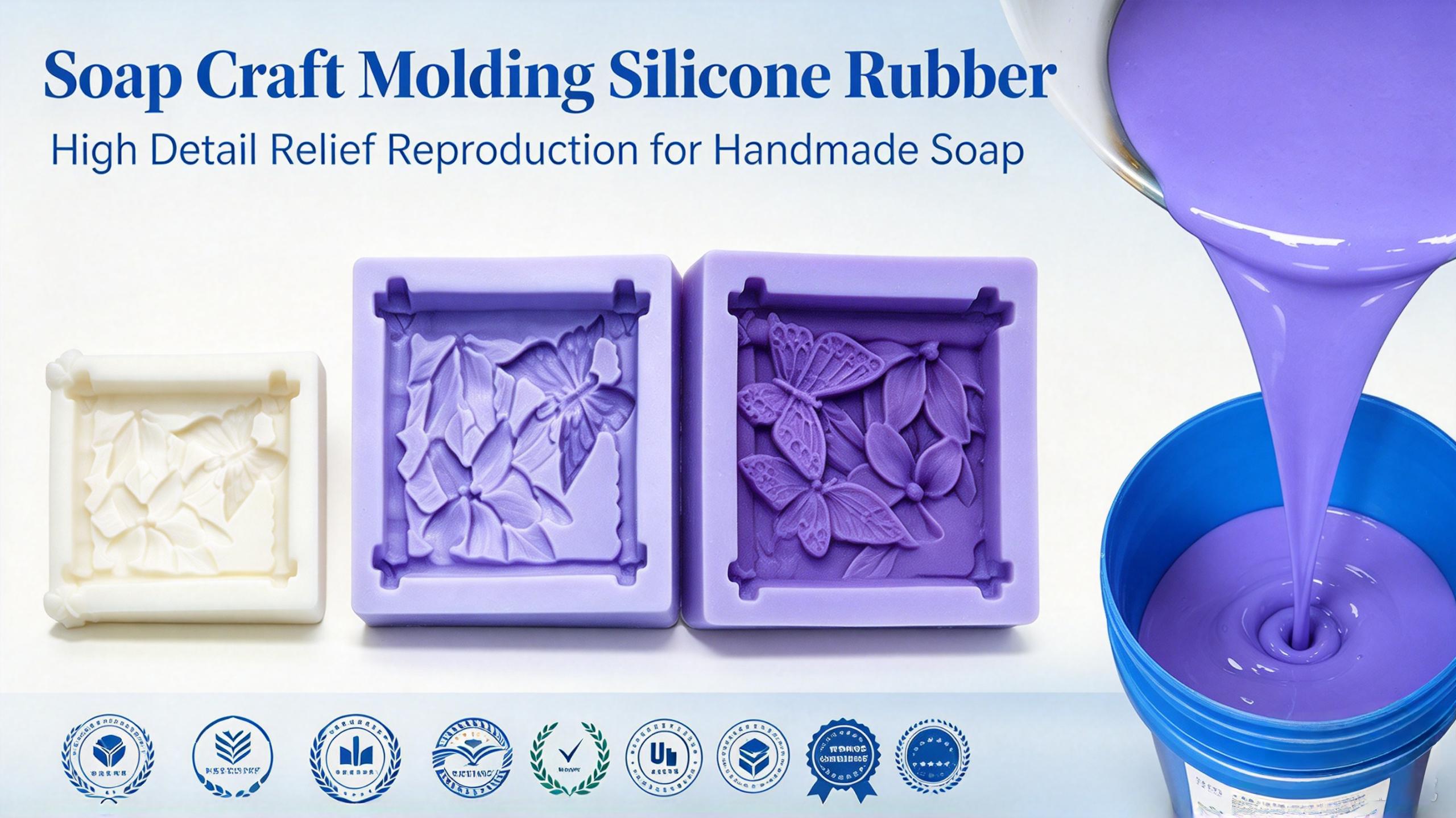
Most art soaps feature special shapes and thin relief structures, so the elasticity and tear resistance of silicone are critical during demolding. This soap-specific molding silicone adopts low-hardness soft formula. The cured silicone is flexible with excellent resilience, resisting tearing and edge chipping when bent for demolding. Even complex relief shapes such as hollow parts and thin petals can be released completely without damaging relief details. Meanwhile, its linear shrinkage rate is kept extremely low. The finished mold maintains stable dimensions. Mass-produced relief soaps have uniform size and shape without warpage, ensuring consistent quality for products in the same series.
In terms of adaptability to soap casting, cold process soap and essential oil soap often contain alkaline soap solution. Ordinary mold silicone tends to be corroded and sticky after long-time contact. Optimized for soap making, this reproduction silicone has good resistance against soap solution erosion. The mold is not easy to be corroded, and demolding is smooth without sticking. The mold can be reused for many pouring cycles, which greatly reduces material and labor cost from repeated mold making and lowers sampling and mass production cost for craft soap brands.
This liquid silicone supports two mainstream molding methods: brush molding and pour molding. For complex deep-relief soap prototypes, layered brush molding can be adopted. Silicone is applied in multiple coats, and glass fiber cloth can be added to strengthen the mold shell. Pour molding is suitable for prototypes with relatively simple shapes, featuring simple operation and low learning threshold. Curing takes place at room temperature without heating equipment. It can be flexibly used by individual creators, small craft studios for sampling, and large soap factories for mass mold production.
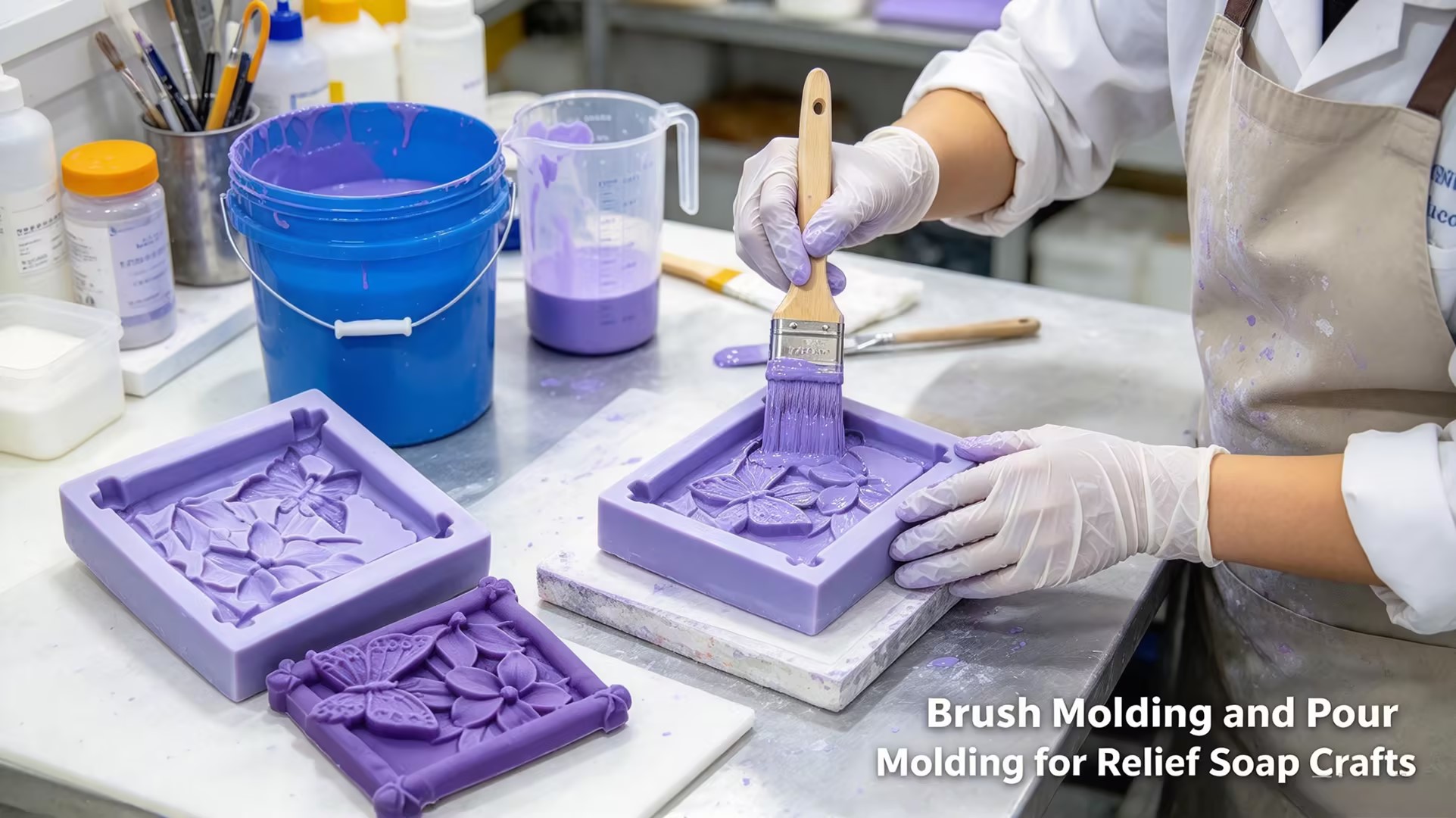
Industry trends show that the handmade soap market is rapidly segmented. Orders for custom relief soaps, IP-themed shaped soaps and limited-edition holiday art soaps keep growing. Downstream brands continuously enrich product shapes and put forward diversified requirements on mold materials. Material manufacturers keep optimizing formulas, launching silicone grades with different hardness and working time, and improving product test documents to meet environmental compliance requirements for craft exports.

August 31, 2026

August 25, 2026

September 28, 2026
Email to this supplier
August 31, 2026
August 25, 2026
September 28, 2026
Privacy statement: Your privacy is very important to Us. Our company promises not to disclose your personal information to any external company with out your explicit permission.
Fill in more information so that we can get in touch with you faster
Privacy statement: Your privacy is very important to Us. Our company promises not to disclose your personal information to any external company with out your explicit permission.