







Send Message
Privacy statement: Your privacy is very important to Us. Our company promises not to disclose your personal information to any external company with out your explicit permission.
 Shenzhen Hong Ye Jie Technology Co., Ltd
English
In recent years, the global collectible toy, blind box and handcrafted figure market has stayed hot. Consumers have raised increasingly higher requirements on the fineness, detail reproduction and consistency of cartoon figures, doll ornaments and Q-version characters. Toy brands are no longer limited to simple single items. They are gradually shifting toward batch reproduction and serialized production. The performance of mold materials in the upstream industrial chain has become a key factor determining product quality. Toy figure mold silicone, as the core material for figure reproduction, enjoys broad application prospects.
Prototypes of figures usually contain complex shapes such as delicate facial features, hair textures, costume folds and accessory grooves, which set high standards for detail reproduction of mold materials. Traditional mold materials tend to lose textures, blur edges or tear during demolding, damaging figure details. Toy figure mold silicone has moderate fluidity. After mixing and defoaming, it can fully cover the prototype surface and penetrate every fine contour and groove structure to achieve millimeter-level reproduction. It restores all details of the prototype. Resin, PU and gypsum cast figures have clear outlines and three-dimensional facial features without missing textures or bubble defects, preserving the designer's creative vision to the maximum.
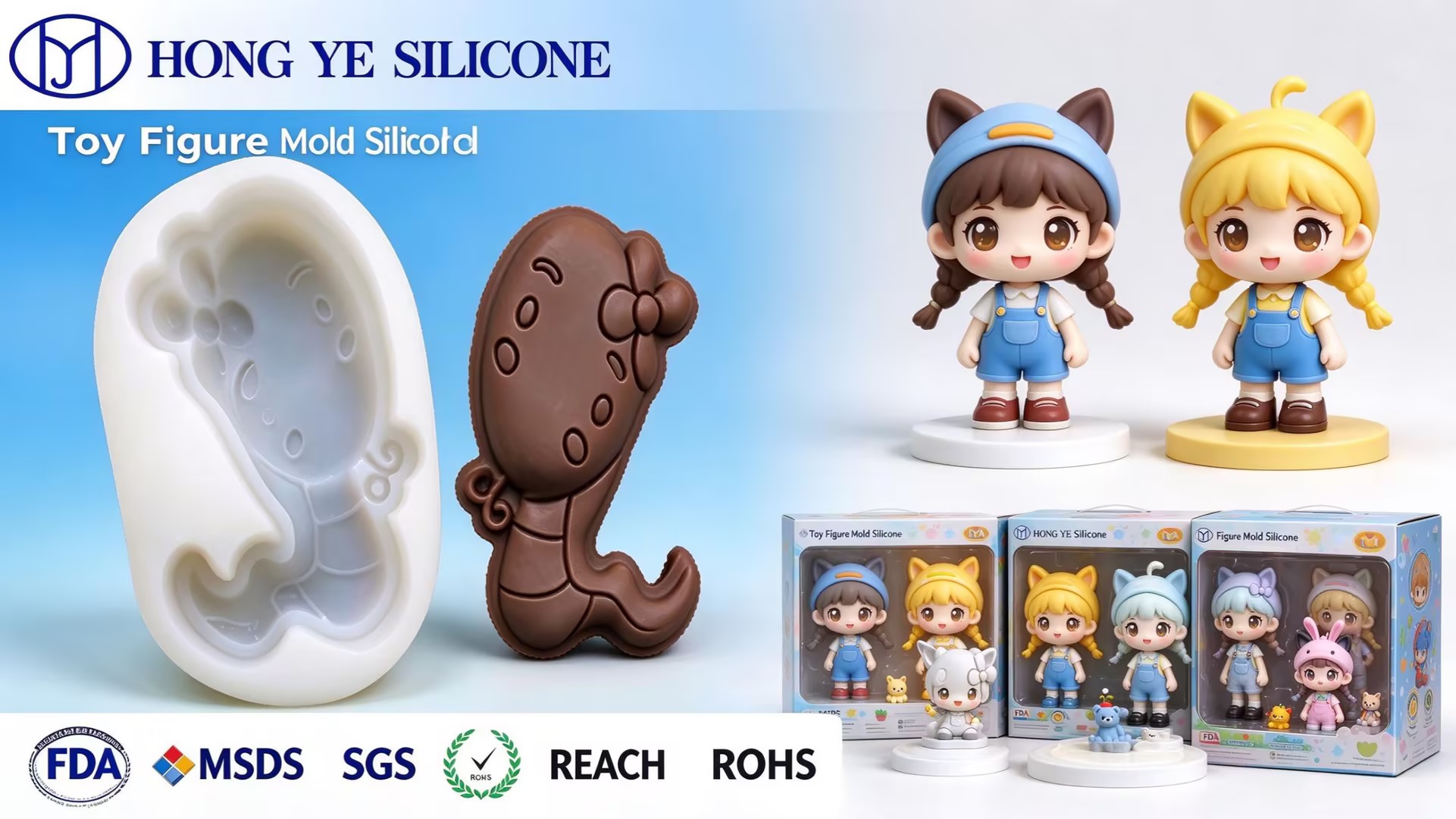
Toy figures mainly consist of thin edges, small protrusions and hollow structures, so the elasticity and tear resistance of silicone are critical during demolding. This toy-specific mold silicone adopts low-hardness soft formula. The cured silicone is flexible with excellent resilience, resisting tearing and edge chipping when bent for demolding. Even thin structures such as ears, antennae and hair accessories can be released completely without damaging weak details. Meanwhile, its linear shrinkage rate is kept extremely low. The finished mold maintains stable dimensions. Mass-produced figures have uniform size and stable shape, ensuring assembly precision and product consistency of blind box figures in the same series.
In terms of adaptability to toy casting, figure production simultaneously targets resin, PU and gypsum casting materials. Unsaturated resin releases heat during curing and carries chemical activity. PU raw materials are also corrosive. Ordinary molds tend to swell and harden. Toy figure mold silicone is optimized for multiple casting systems. Condensation-cured tin-catalyzed grade offers high cost performance for mass resin figure production. Addition-cured platinum-catalyzed grade features low odor and low small molecule release, meeting environmental testing standards for export toys to Europe and the US. The cured silicone mold resists resin and chemical erosion. Demolding is smooth without sticking. The mold can be reused for many pouring cycles, greatly reducing material and labor cost from repeated mold making and cutting comprehensive production cost of toy figures.
This liquid silicone supports two mainstream molding methods: brush molding and pour molding. Multi-surface figures with complex structures adopt layered multi-piece brush molding. Silicone is applied in multiple coats with fiberglass cloth reinforcement, and gypsum or FRP outer shell is made for support. Small and medium figures with simple shapes can be cast directly with frame, easy to operate. Room temperature curing eliminates heating equipment. Prototype sampling in toy studios and mass production in toy factories can both use it flexibly.
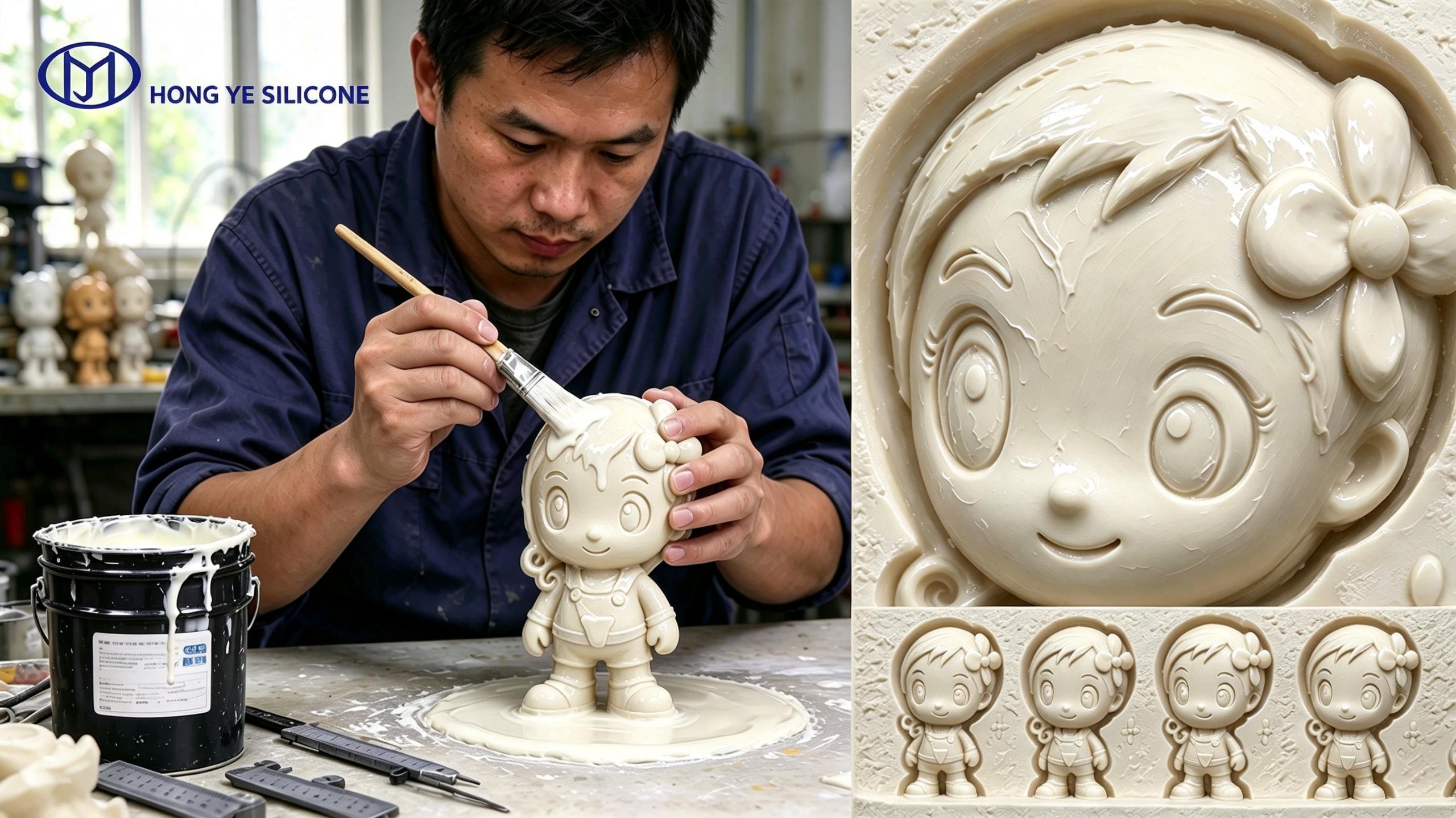
Industry trends show the toy industry is moving toward personalized customization and fast new product launch. Orders for IP collaboration, blind box series and collectible figures keep rising, featuring small batches, multiple styles and fast updates. Traditional hard molds have long mold opening cycles and high modification costs, which are difficult to adapt to fast iteration. Liquid silicone features short mold opening cycle. After the prototype is modified, the mold can be remade quickly, perfectly matching the fast new product launch and custom order receiving trend in the collectible industry. Material manufacturers keep optimizing formulas, launching silicone grades with different hardness and working time, and improving test reports to meet environmental compliance requirements for toy exports.

August 31, 2026

August 25, 2026

October 14, 2026

September 28, 2026
Email to this supplier
August 31, 2026
August 25, 2026
October 14, 2026
September 28, 2026
Privacy statement: Your privacy is very important to Us. Our company promises not to disclose your personal information to any external company with out your explicit permission.
Fill in more information so that we can get in touch with you faster
Privacy statement: Your privacy is very important to Us. Our company promises not to disclose your personal information to any external company with out your explicit permission.