Product Abstract
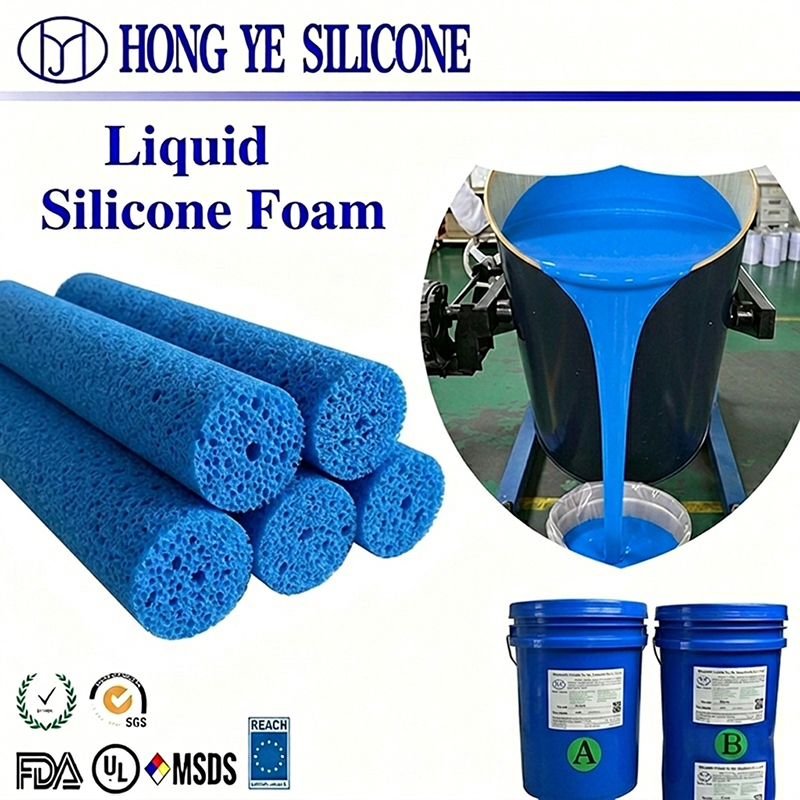
Hong Ye silicone rubber's Hydrogen Fuel Cell Anti-Corrosion Sealing Foaming Silicone Rubber is new energy hydrogen-resistant industrial Addition Curing Silicone, fuel cell core component sealing RTV Silicone Foam. Formulated with hydrogen medium inert anti-corrosion liquid silicone, this gas-tight anti-erosion Foam Silicone features hydrogen corrosion resistance, high air tightness, low temperature toughness and insulation stability, with adjustable 2-5 times compact foaming ratio. It is used for hydrogen fuel cell proton membrane support sealing, cell stack gap buffer filler, hydrogen supply pipeline anti-leakage gasket, new energy fuel cell insulation protection layer. Matched with fuel cell precision industrial Mold Silicone, the inert Foamed Silicone forms gas-tight anti-corrosion Silicone Sponge for hydrogen energy power equipment protection.
Product Overview
This hydrogen fuel cell dedicated two-component liquid silicone adopts hydrogen medium inert formula, no chemical reaction with high-purity hydrogen to avoid fuel cell component corrosion and air leakage failure. As new energy stable Addition Curing Silicone, it maintains excellent sealing toughness under long-term hydrogen circulation working condition. After compact closed-cell foaming, it forms high-airtight anti-corrosion Silicone Sponge. Different from ordinary foam prone to hydrogen medium penetration, this dense RTV Silicone Foam ensures zero air leakage of fuel cell, belonging to hydrogen energy core equipment safe sealing Foaming Silicone Rubber.
Core Product Features & Advantages
1. Hydrogen medium inert protection: Special molecular structure of Foaming Silicone Rubber resists hydrogen corrosion and penetration.
2. Ultra-high air tightness: Dense closed pores of liquid silicone realize zero hydrogen leakage sealing effect.
3. Low-temperature stable toughness: ModifiedFoam Silicone adapts fuel cell low-temperature startup environment.
4. Electrical insulation safety: Stable insulating property of Addition Curing Silicone avoids cell short circuit risk.
5. Precision cell molding: Fits fuel cell micro-component precision Mold Silicone shaping.
6. Long-cycle service life: Cured Foamed Silicone adapts long-term hydrogen energy equipment cyclic operation.
Step-by-Step Usage Instructions
1. Hydrogen-resistant stirring: Stir fuel cell grade A/B liquid silicone fully to disperse anti-hydrogen additives evenly.
2. Accurate mixing: 1:1 low-speed stirring for 3 minutes to stabilize airtight anti-corrosion performance.
3. Deep defoaming treatment: Eliminate micro pores to ensure zero leakage of finished Silicone Sponge.
4. Precision mold curing: Shaping via fuel cell dedicated Mold Silicone to obtain sealed RTV Silicone Foam.
Application Scenarios
Hydrogen fuel cell stack gap sealing filler, proton exchange membrane support buffer pad, hydrogen pipeline anti-leakage gasket, fuel cell power module insulation foam, hydrogen energy vehicle power unit anti-corrosion layer. The airtight Foamed Silicone guarantees safe and efficient operation of hydrogen fuel cell equipment.
Precautions
Avoid sharp scratch damage, tiny cracks will cause hydrogen leakage and invalidate Addition Curing Silicone sealing performance.
Packaging & Storage
25KG new energy sealed barrel, dry inert gas protection storage, keep hydrogen-resistant performance of raw Foam Silicone.
FAQ
Q1: Effectively prevent hydrogen medium leakage and corrosion?
A1: Hydrogen-inert dense Foaming Silicone Rubber achieves long-term anti-leakage and anti-corrosion effect.
Q2: Stable performance during fuel cell low-temperature startup?
A2: Low-temperature tough liquid silicone maintains sealing elasticity without embrittlement.
Q3: Custom micro-precision fuel cell parts with Mold Silicone?
A3: High-precision low-shrinkage Addition Curing Silicone adapts micro-component molding requirements.













 Contact Now