







Send Message
Privacy statement: Your privacy is very important to Us. Our company promises not to disclose your personal information to any external company with out your explicit permission.
 Shenzhen Hong Ye Jie Technology Co., Ltd
English
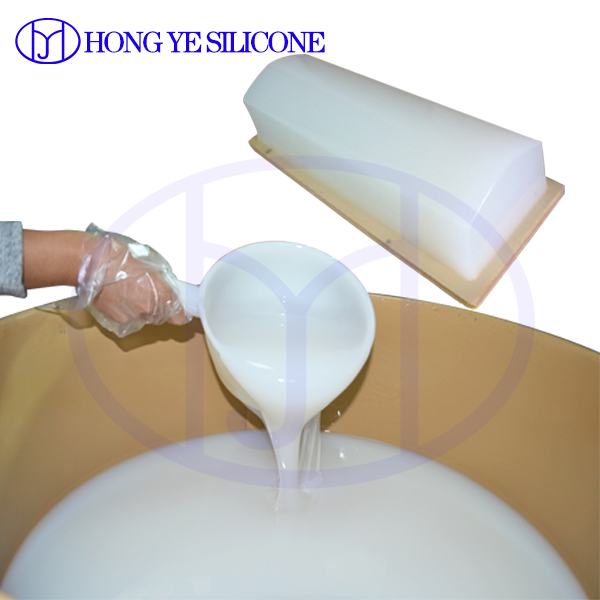
Conventional bionic silicone applied in bionic skin with built-in flexible tactile sensors has four unavoidable pain points. First, conductive traces get corroded: residual small molecules in ordinary silicone formula gradually erode conductive films and nano conductive traces when contacting flexible sensors for a long time, causing resistance drift and open circuit and leading to reliability test failure of prototypes. Second, high curing heat damages components. High heat released during silicone curing can burn thermal-sensitive flexible sensing films in casting encapsulation and directly scrap samples. Third, asynchronous deformation causes distorted haptic signals. Mismatch between elastic modulus of silicone and sensor films leads to squeezing and stretching of sensing arrays during finger bending and joint twisting, uneven pressure transfer and signal jumping and delay, resulting in wrong judgment of human touch perception. Fourth, defects in ultra-thin molding. Ordinary silicone easily forms bubbles and pinholes when making thin haptic skin. Gaps between sensor and silicone weaken pressure transmission and reduce tactile sensitivity.
Such haptic bionic skin is widely used in humanoid dexterous hands, full-body haptic humanoid robots, rehabilitation bionic test equipment and human-machine tactile test platforms. The R&D cost of these projects is high and sensing components are expensive. Material incompatibility will scrap the whole prototype, extend R&D cycle and greatly raise project cost. The market urgently needs a dedicated bionic skin substrate material which retains realistic skin texture while being naturally compatible with flexible tactile sensors.
Targeting the material compatibility pain points of bionic skin with embedded flexible tactile sensors, Shenzhen Hong Ye Jie Technology has completed multiple rounds of formula purification, molecular modification and sensor compatibility verification, and launched sensor-compatible flexible substrate bionic skin silicone. Deep purification is applied to remove small molecules that erode conductive films and achieve low interference and non-corrosion to flexible sensing circuits. Optimized curing system reduces heat release. One-shot encapsulation molding protects inner sensing components with low reaction temperature. Elastic modulus is precisely adjusted. During stretching and bending deformation, silicone matrix deforms synchronously with sensing films and pressure transfers evenly to sensing arrays, greatly reducing signal drift and data distortion caused by deformation and guaranteeing stable haptic collection.
Its core strengths focus on sensor compatibility, low heat curing, synchronous deformation for stable haptic signal transmission and tight lamination for ultra-thin molding. Different from ordinary bionic silicone only for appearance simulation, this material is specially developed as carrier substrate for flexible sensors. While keeping silicone’s ability of skin texture reproduction and dynamic tear resistance, priority is given to long-term stable operation of built-in haptic sensing system. Ultra-low curing shrinkage rate can finely replicate human skin pores and fine lines even for ultra-thin skin, realizing both realistic appearance simulation and high-precision haptic perception. Good defoaming performance ensures low bubble rate for thin skin molding. Sensors fit tightly with silicone without gaps and pressure signal loss is minimized.
Compatible with pouring and brush coating encapsulation process. Integrated molding forms composite haptic skin in one step, simplifying production procedure of bionic skin and reducing interface failure risk brought by secondary sensor lamination. Batch performance is stable and sensing interference indicators are inspected per batch. It meets requirements of small prototype sampling for universities and research institutions, as well as pilot and mass procurement of robot enterprises.
This sensor-compatible flexible substrate bionic skin silicone applies to haptic skin of humanoid dexterous hands, full-body distributed haptic perception humanoid robots, research haptic interaction test prototypes, rehabilitation bionic interactive robots and human-machine tactile perception test platforms, all bionic skin projects requiring embedded flexible thin-film pressure sensors.
Hong Ye Jie Technology continues to iterate a full differentiated bionic silicone matrix covering durability, moisture resistance, high toughness, clean performance, environmental safety, hygienic protection, weathering anti-aging, high-resilience anti-deformation, anti-static low dust accumulation and sensor-compatible flexible substrate series. Free sample testing, customized elastic modulus, hardness and skin tone, plus full-process molding technical support are available. It helps global haptic humanoid robot and dexterous hand R&D projects solve circuit corrosion and haptic signal drift problems, shorten prototype development cycle and reduce scrapping cost of expensive sensing components.

August 31, 2026

August 25, 2026

September 28, 2026
Email to this supplier
August 31, 2026
August 25, 2026
September 28, 2026
Privacy statement: Your privacy is very important to Us. Our company promises not to disclose your personal information to any external company with out your explicit permission.
Fill in more information so that we can get in touch with you faster
Privacy statement: Your privacy is very important to Us. Our company promises not to disclose your personal information to any external company with out your explicit permission.