



Low VOC Safe Bionic Skin Silicone
$9-15 /Kilogram
| Payment Type: | L/C,Paypal |
| Incoterm: | DDP,FOB |
| Min. Order: | 1 Kilogram |
| Transportation: | Ocean,Land,Express,Air |
Share:


 Shenzhen Hong Ye Jie Technology Co., Ltd
English
$9-15 /Kilogram
| Payment Type: | L/C,Paypal |
| Incoterm: | DDP,FOB |
| Min. Order: | 1 Kilogram |
| Transportation: | Ocean,Land,Express,Air |
Share:
Model No.: HY-E610
| Selling Units | : | Kilogram |
| Picture Example | : |


|
The file is encrypted. Please fill in the following information to continue accessing it
This low‑odor low‑VOC environment‑friendly bionic skin silicone is platinum‑cured RTV‑2 liquid silicone developed by Shenzhen Hong Ye Jie Technology targeting pain points of enclosed indoor bionic projects. Conventional bionic silicone may retain small‑molecule volatile components. When deployed in poorly‑ventilated closed spaces, volatile substances keep accumulating and generate noticeable pungent plastic smell, bringing discomfort to visitors and creating risks for indoor‑air‑quality acceptance tests for exhibition projects. Extra fresh‑air‑ventilation equipment has to be installed, raising construction and operation costs for cultural‑tourism and museum projects.
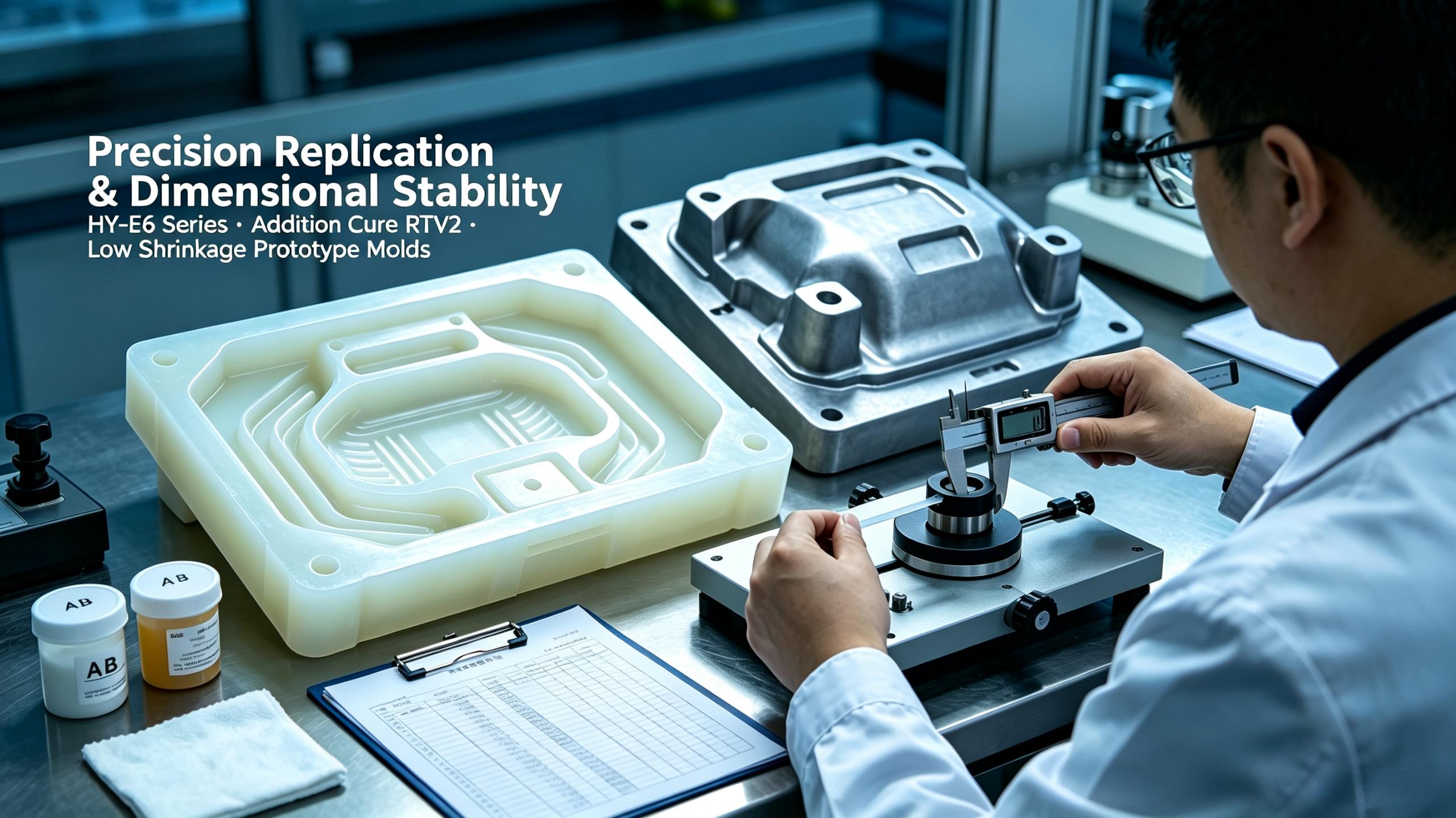
This silicone adopts specially‑screened low‑volatile raw‑material components and optimized cross‑linking technology to minimize unreacted residual substances and reduce VOC emission and intrinsic odor. It follows standard 1:1 weight mixing ratio. It can cure at room temperature or with heating acceleration. Both pouring and brushing processes are supported for integrated molding of robot full‑body skin, facial layers and hand contact areas. Hardness ranges from 5A‑24A. 5‑13A ultra‑soft environmental grade fits face, eyelid, lip and children‑contact parts with soft touch and faint odor for close‑range human contact. 14‑24A tough environmental grade fits limbs and trunk for long‑hour operation inside enclosed venues.
Core advantages: low‑odor performance, low‑VOC emission, enclosed‑space compatibility and human‑contact environmental safety. Different from ordinary silicone which relies on strong ventilation to dilute volatiles, this material produces very limited volatile components, so unpleasant plastic‑smell accumulation can be avoided even under poor ventilation. It maintains good bionic simulation capability with ultra‑low curing shrinkage ≤0.08%, accurately reproducing human‑skin pores and fine textures. The upgraded color‑stable formula resists yellowing and darkening under long‑time indoor lighting. It delivers balanced tear‑resistance and anti‑fatigue performance, resisting cracking and peeling under repeated joint flexion and micro‑expression movement.
Non‑irritating and human‑contact‑safe, suitable for public close viewing and touching interaction including children‑oriented science‑popular scenarios. Moderate fluidity and good defoaming performance ensure high finished‑product yield. Volatile‑emission performance keeps consistent across different production batches, supporting prototype sampling and mass supply for large‑scale exhibition‑venue projects.
Shenzhen Hong Ye Jie Technology maintains a full differentiated bionic‑silicone portfolio covering self‑healing, hydrolysis‑resistant, high‑tear‑strength, ultra‑low‑modulus, high‑resilience, matte anti‑fingerprint, zero‑bleed clean‑grade and this new low‑odor low‑VOC environmental series. Customization for VOC‑performance adjustment and skin‑tone matching is available. Free samples and full‑set process guidance are provided to help global indoor enclosed‑space robot projects satisfy indoor environmental‑safety standards.
Thoroughly stir Part A and Part B for more than 3 minutes before use to disperse environmental‑modified fillers. Mix strictly at 1:1 weight ratio and fully stir scraping bottom and wall for 2‑3 minutes. Complete sufficient vacuum defoaming. Room‑temperature pot‑life 42‑52 minutes; full cure 6‑10 hours at room temperature. Heating at 60‑80℃ accelerates production without damaging core low‑VOC environmental performance.
Platinum‑cured silicone must avoid contamination of sulfur, tin, lead, phosphorus to prevent curing failure and deterioration of volatile‑emission indicators. Keep tools and molds clean. Even though the material is low‑emission, basic ventilation is still recommended for real‑world projects. For children‑contact devices, complete full‑set safety tests before commercial deployment.


Privacy statement: Your privacy is very important to Us. Our company promises not to disclose your personal information to any external company with out your explicit permission.
Fill in more information so that we can get in touch with you faster
Privacy statement: Your privacy is very important to Us. Our company promises not to disclose your personal information to any external company with out your explicit permission.



 Contact Now